Simple player behavior
Add basic crafting preferences to a card-pack model so player decisions affect collection progress. In the last section, we encountered an issue.
In the last section, we encountered an issue:
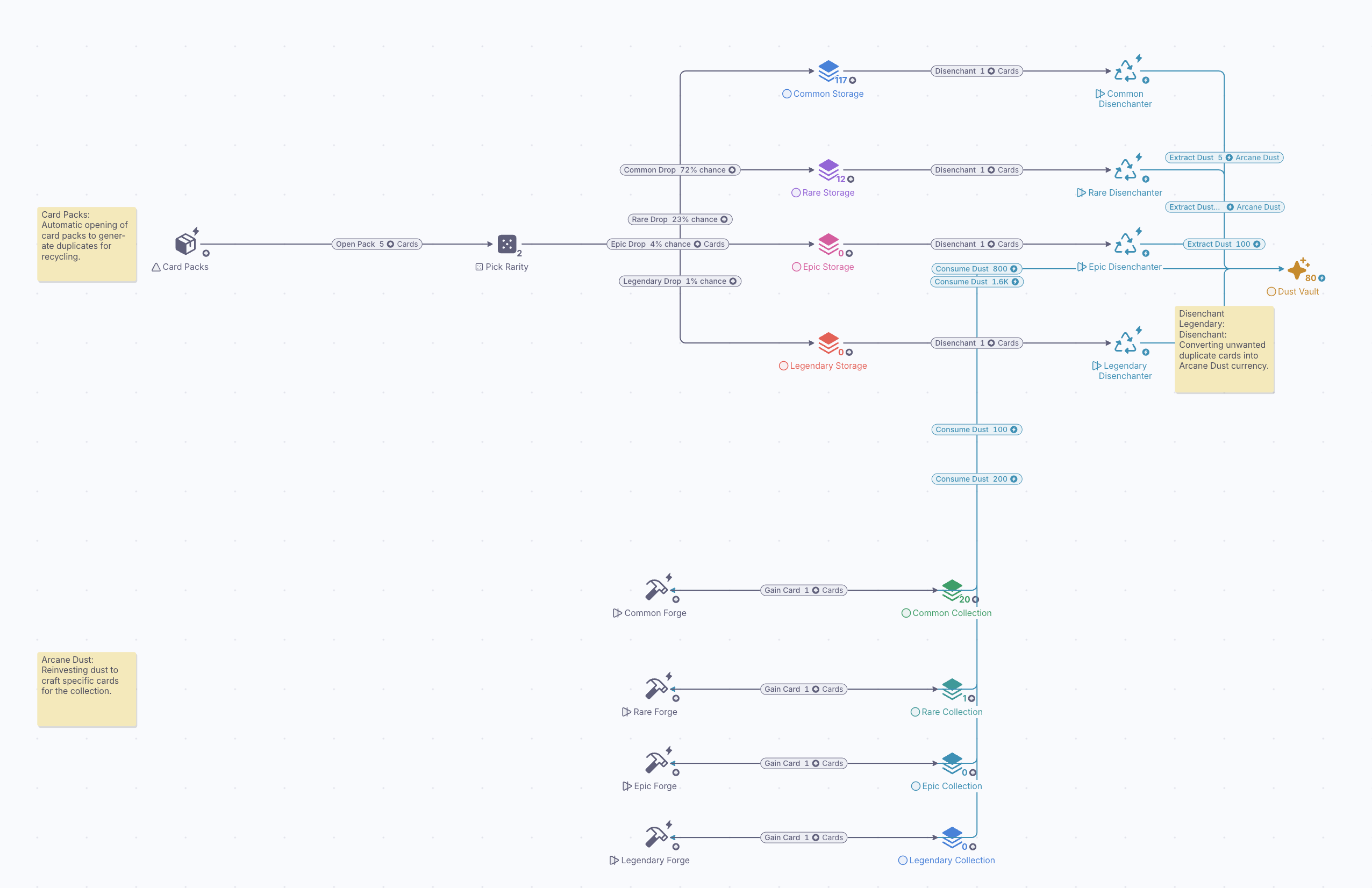
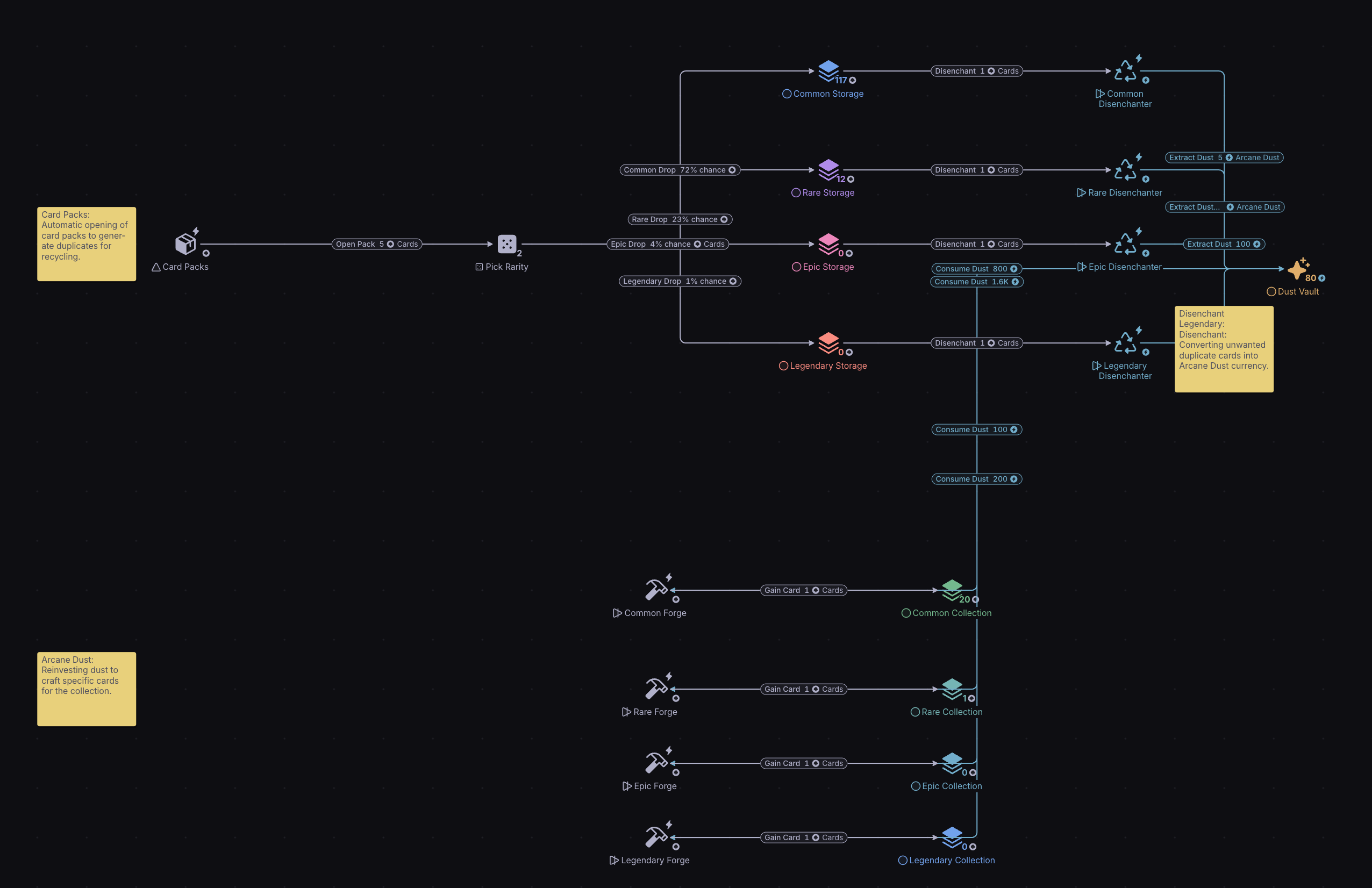
Almost only Common cards are being crafted. This is because our modeled player is preferenceless: thus, they craft whatever is most consistently affordable.
Because of this, our player never accumulates enough Arcane Dust to spend on any other rarity. This is not an accurate representation of real players.
We would expect real players to craft higher-rarity cards much more often: why craft a Common card when it’s quite likely to show up in a future card pack anyway?
To address this, we need to introduce some dynamic player behavior into the model. But this raises a vital question: how do players decide what to spend their Dust on? Do they focus on crafting Epics first, then move to Legendaries? Or do they behave more unpredictably?
In order to model player decisions, we need to make an educated guess of how players behave, and implement a solution based on that assumption.
There are two main approaches we can take:
Option A: The player randomly picks a rarity to craft
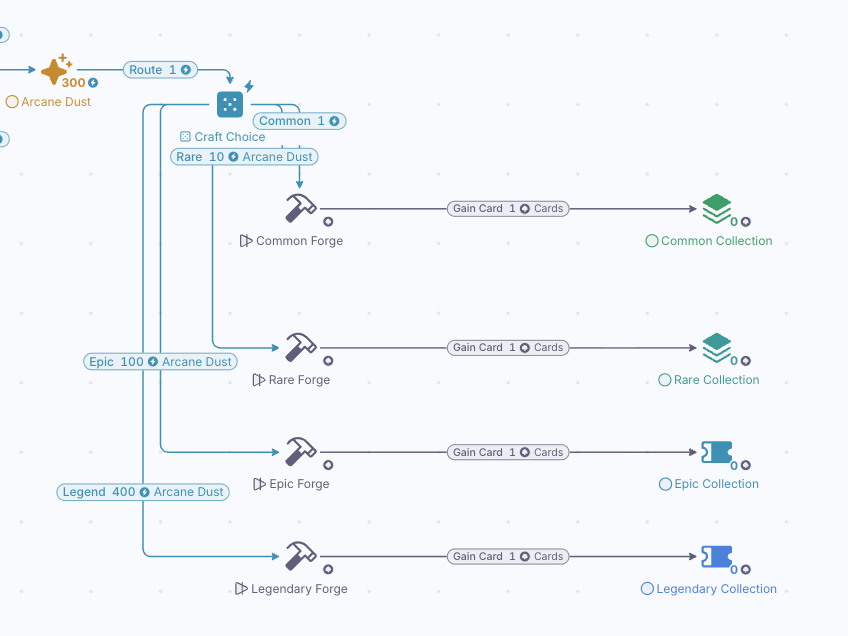
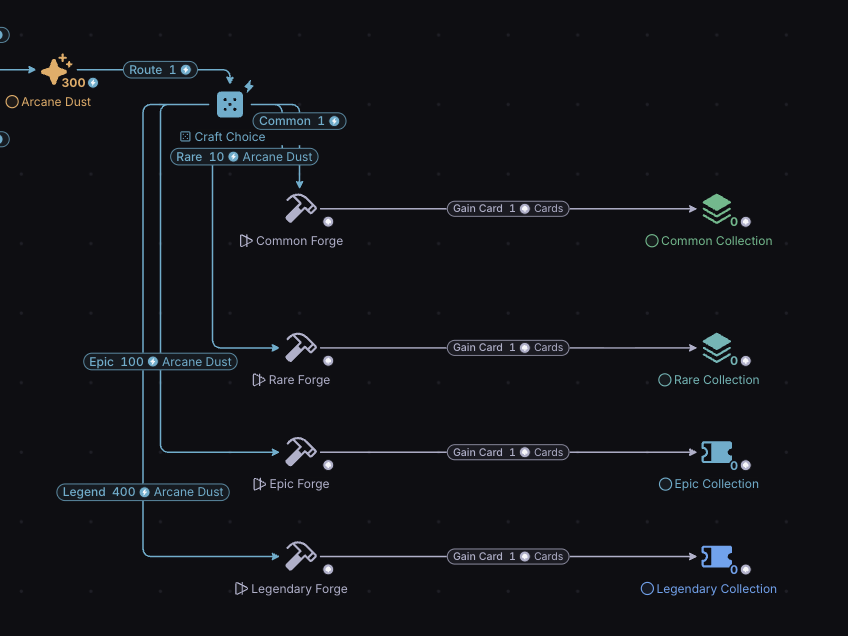
In this approach, we use a Trigger Gate to model the decision-making process.
Instead of making each Craft Converter Auto, we instead make the decision-making Gate Auto: the Gate is now the controlling agent in the diagram.
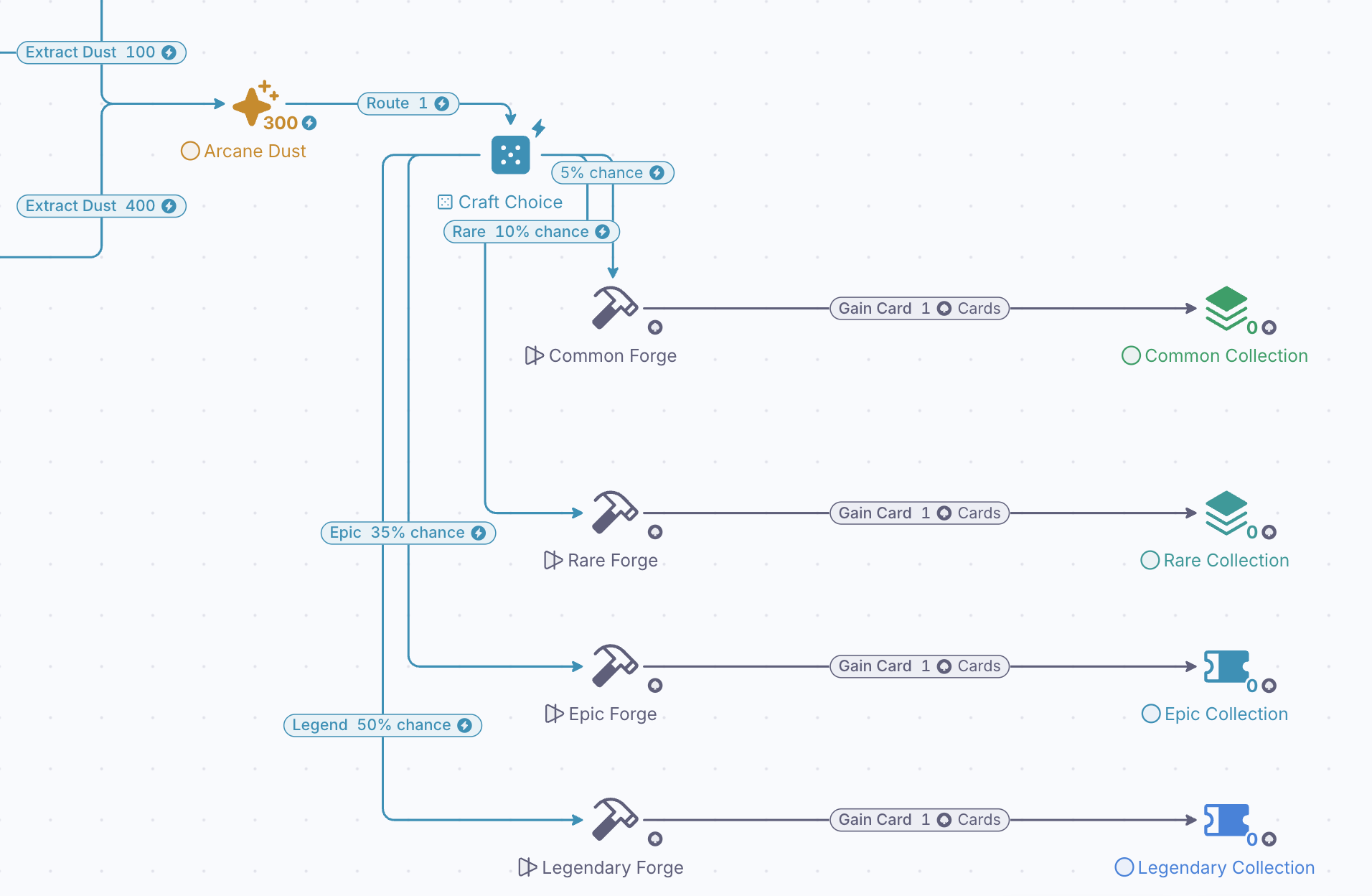
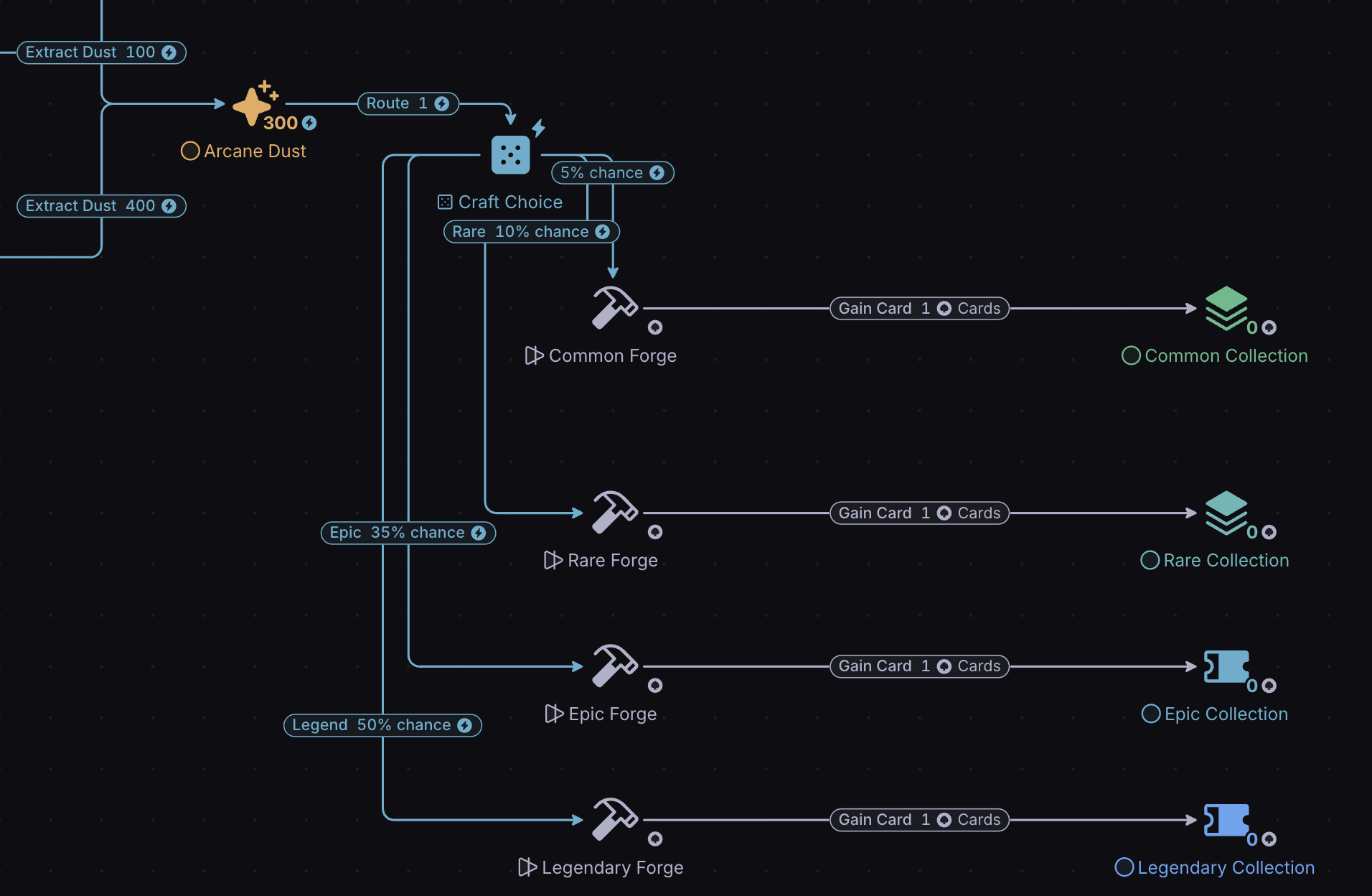
We can then set the relative chances of a player choosing to craft each rarity, based on our best guess. This means, for instance, that a player has a 50% chance to choose to craft a Legendary.
Option B: The player has savings buckets for each rarity
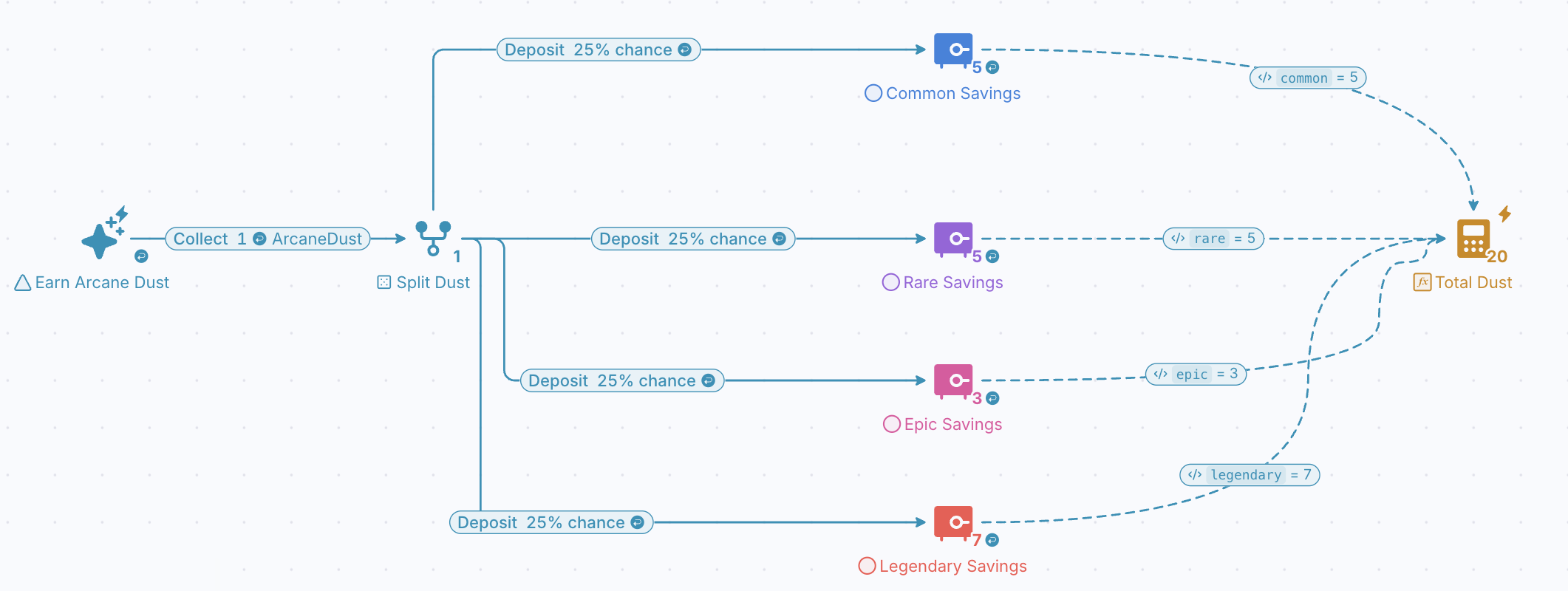
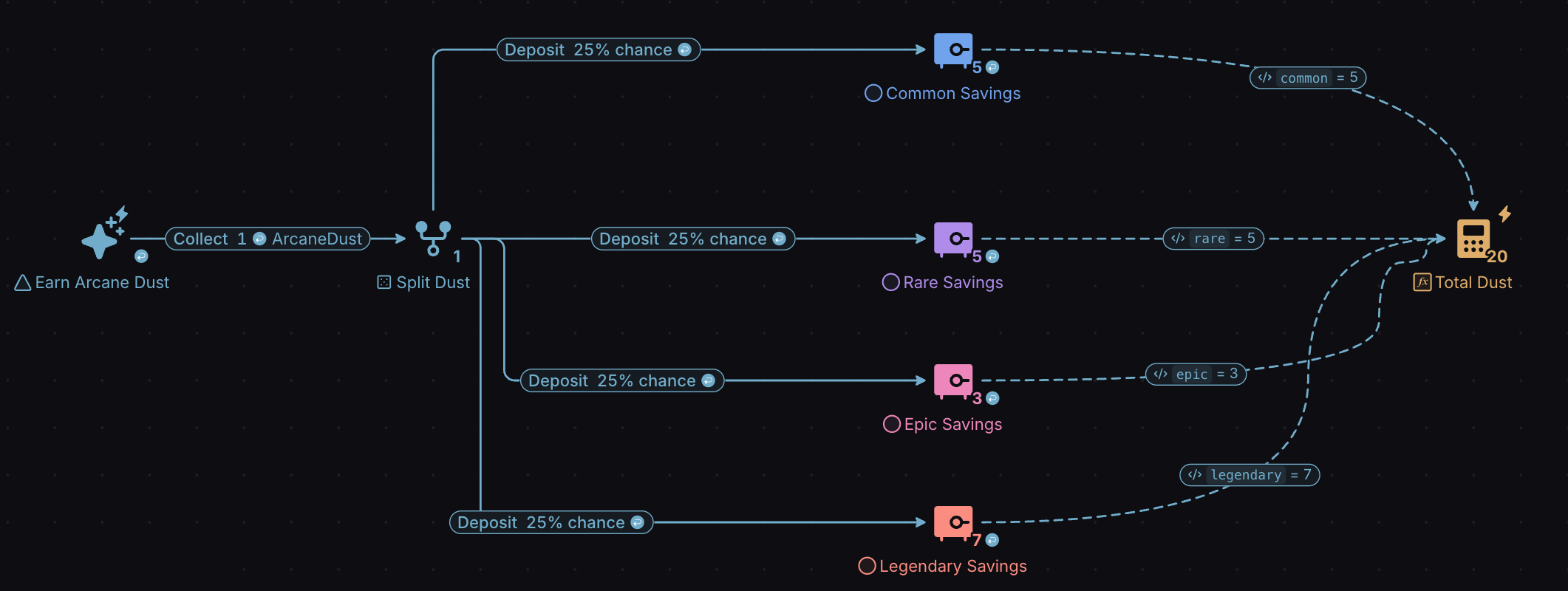
In this approach, when the player earns Arcane Dust, it is split randomly between four different Pools. Each Pool represents the Dust the player has allocated for spending on that particular rarity of cards. Think of this approach like budgeting for food, entertainment, rent, etc. in real life.
We also have a fifth Pool that counts the values of all four Pools, so that we always know how much Dust the player has in total.
This approach is a little more abstract, and probably doesn’t reflect how players actually make decisions. However, it is often accurate enough to model this way.
We will use Option A going forward.
We have replaced the percentages on the Gate with normal numbers (i.e. ratios, or weights). This makes it easier to tweak the values later, as we don’t need to make sure everything still adds up to 100.
When using Gates, weights/ratios are easier to work with when the odds of each outcome are subject to change.
Percentages are best used when the odds are always fixed (like the drop rates of each card rarity), or if there are only two outcomes (like whether a card is a Duplicate or New).
Since we expect Commons to be the least preferable thing to craft, their weight is set to 1. As the weight for Rares is 10, this means that the player is ten times more likely to choose to craft a Rare rather than a Common.
Our modeled player still behaves somewhat irrationally. For instance, there is nothing stopping them from crafting a Rare even if they’ve already collected all the Rares.
We will address this in the next section.