Math Expression
In the editor, press the (x) button in the toolbar to open Diagram parameters, press New parameter and choose Math expression (“Compute a value from a formula”). Use this variable type to define values based on functions available in the math.js library.
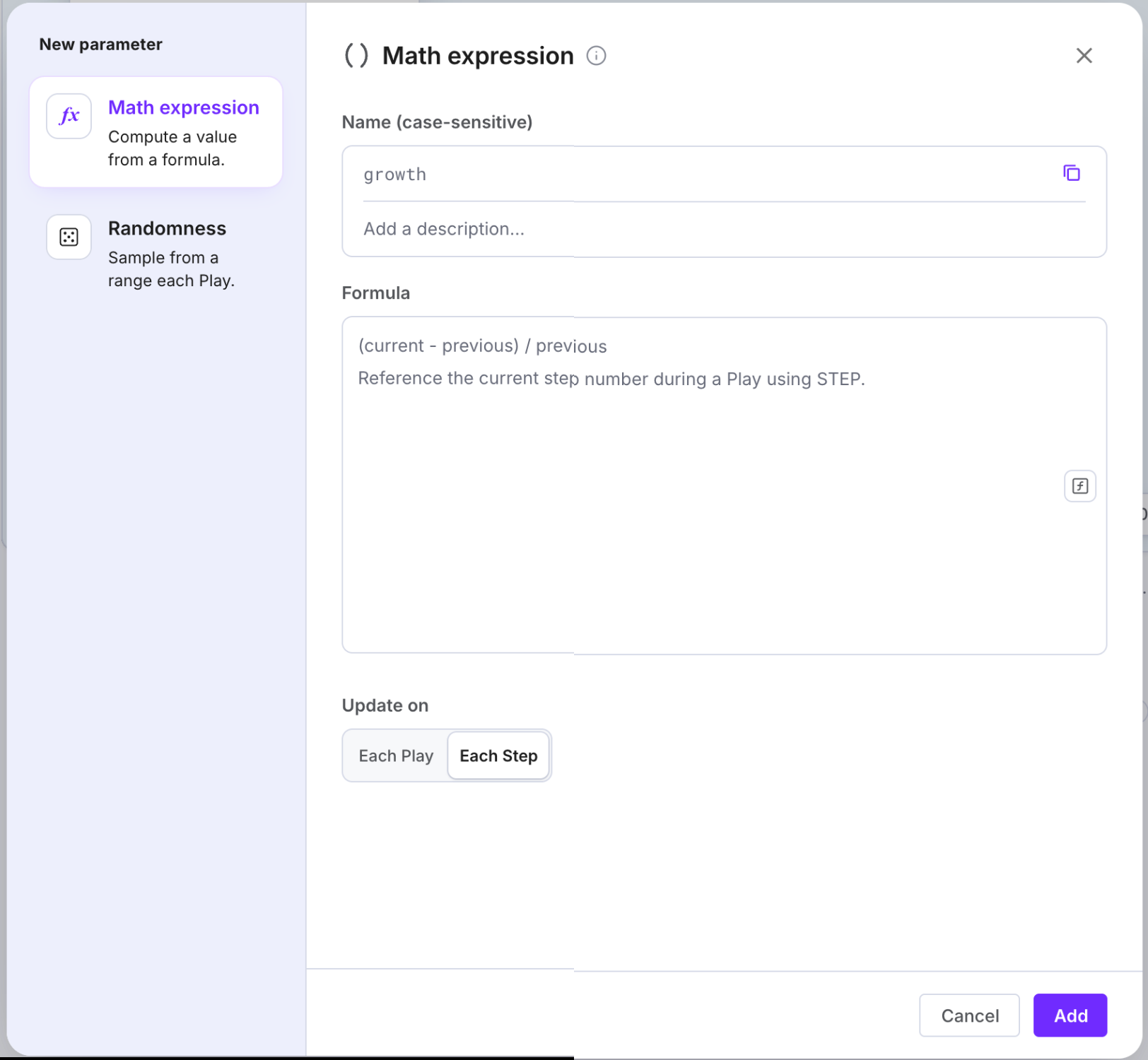
Name
Use the variable’s name to reference it in the Formula fields of nodes and connections throughout your diagrams. See the example below.
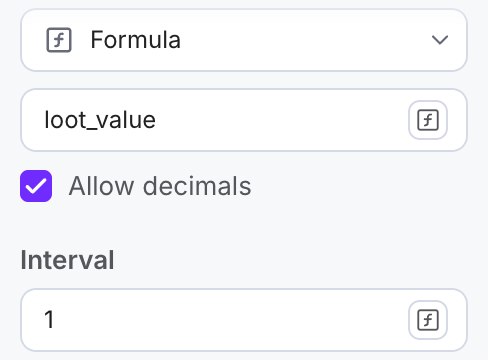
Formula
Machinations supports functions from the math.js library.
Every formula box has a Formula builder button (sparkle). Use it to search functions, insert a component’s value or a parameter, and ask AI to suggest a formula.
You can also reference other parameters (called custom variables in older guides) in the formula. In the example below, our Modifier variable will add +1 to the existing variable RNG.
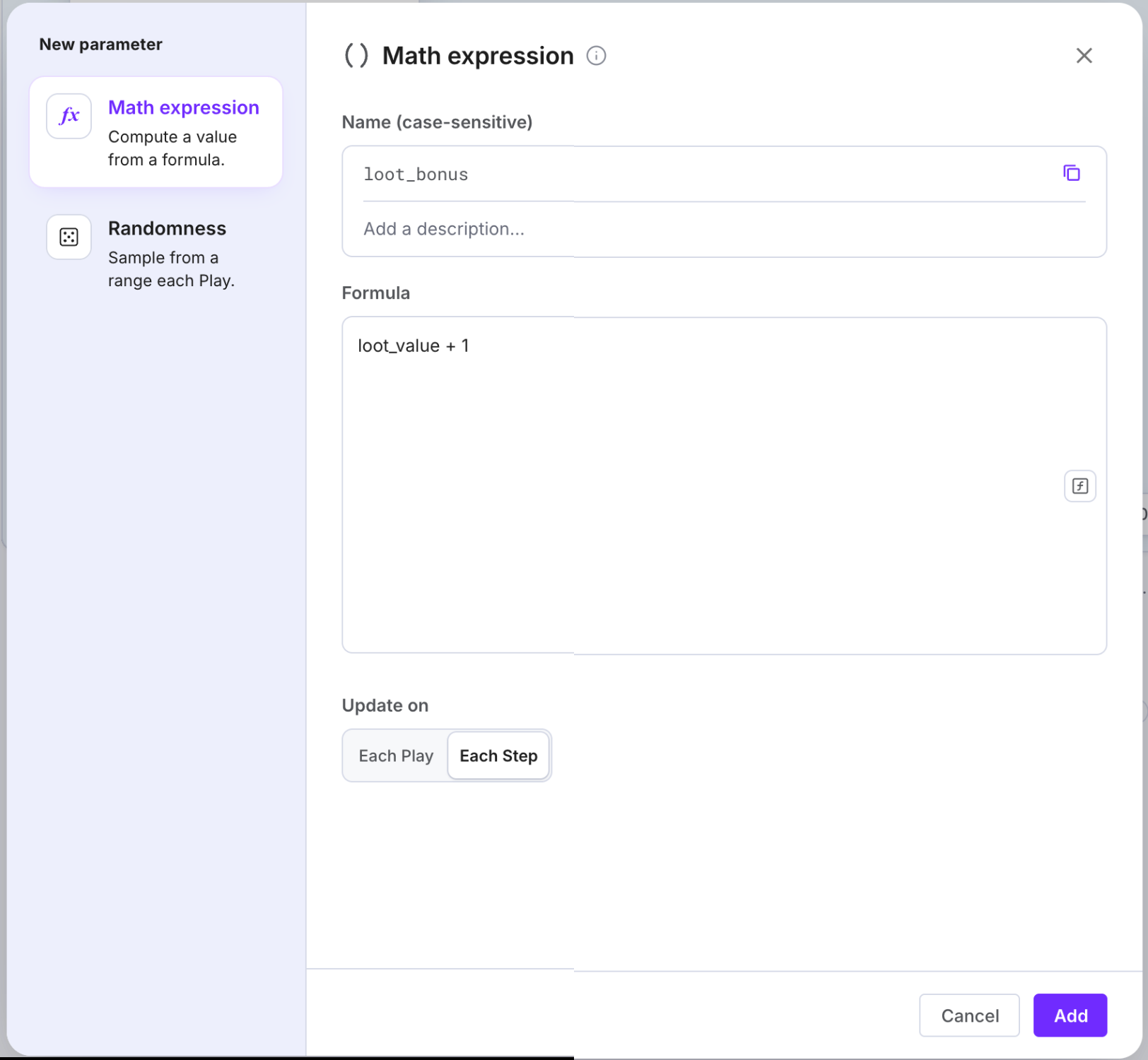
Update on – when the value is generated.
- Each Play – at the beginning of each Play. The value will be the same throughout the execution of the diagram.
- Each Step – the value will be randomly generated at the beginning of each execution step.
Description
Use this field to describe what the formula computes.
Using Arrays
Arrays are a formidable way to declare variables with multiple values inside them. Machinations allows for the use of one- and two-dimensional arrays.
One-dimensional arrays
One-dimensional arrays only contain numbers separated by comma inside squared brackets like this:
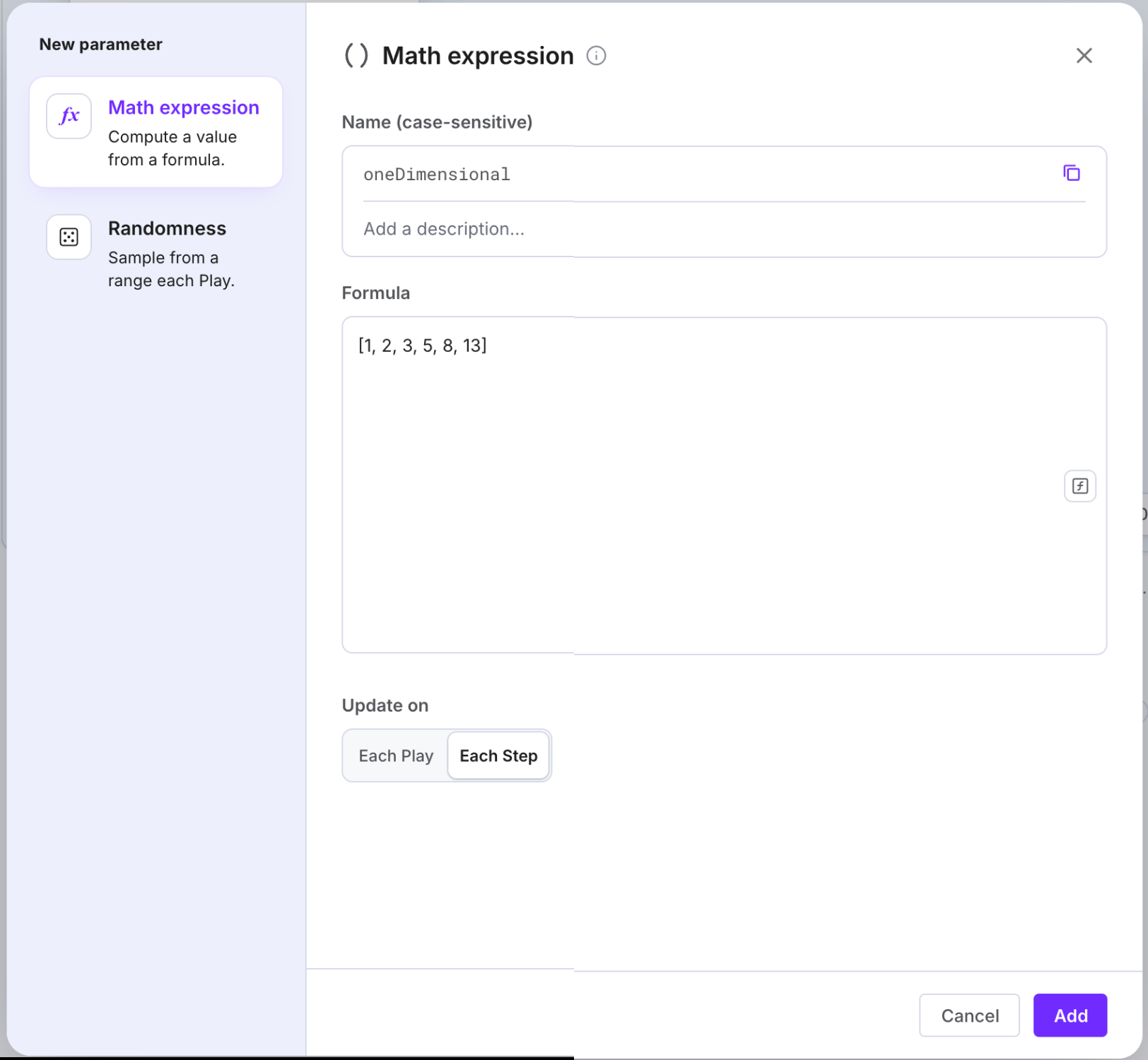
The syntax to fetch data from this array is ArrayName[position]
Example:
Using the Array and sub-array example abovey you can access its values like this: oneDimensional[5]. The result will be 8.
Two-dimensional arrays
Two-dimensional arrays contain multiple arrays seperated by a comma inside squared brackets:
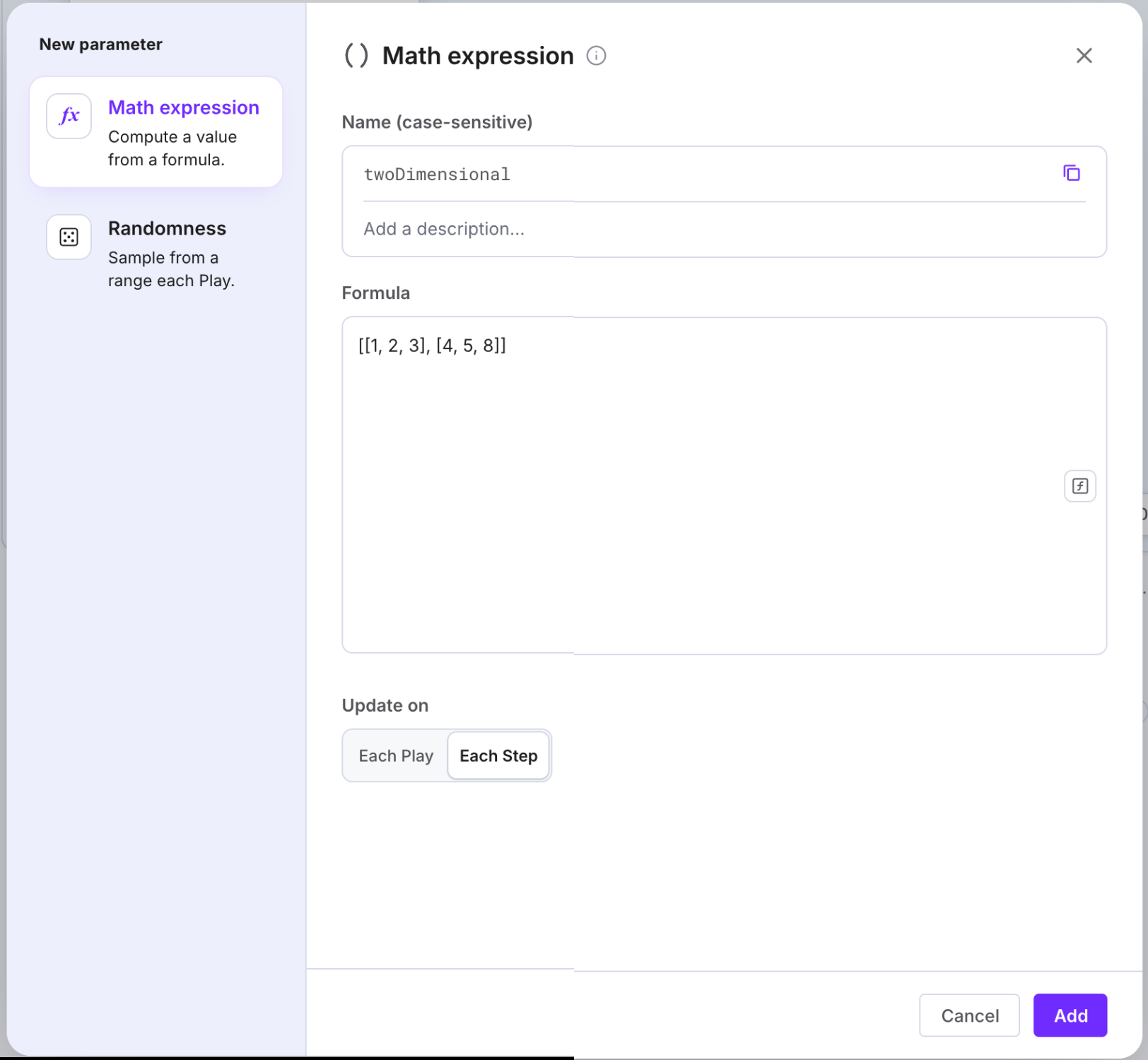
The syntax to fetch data from this two-dimensional array is ArrayName[sub-array,position]
Example:
Using the Array and sub-array example abovey you can access its values like this: twoDimensional[2,3]. The result will be 8.