Google Sheets
You can export your Machinations diagrams to Google Sheets in your Google Drive, and import them back.
Export to Google Sheets
To export your diagram to Google Sheets, Machinations requires access to your Google account. This allows you to navigate and save your Machinations Diagrams into whichever Google Drive folder you want.
Open the Deploy tab in the header and use Export to Google Sheets. Choose the Google Drive folder the sheet goes into.
Once you exported your diagram, you can access the spreadsheet from your Google Drive account and make changes to it.
Please only make changes to the exported file, if you know what you are doing!
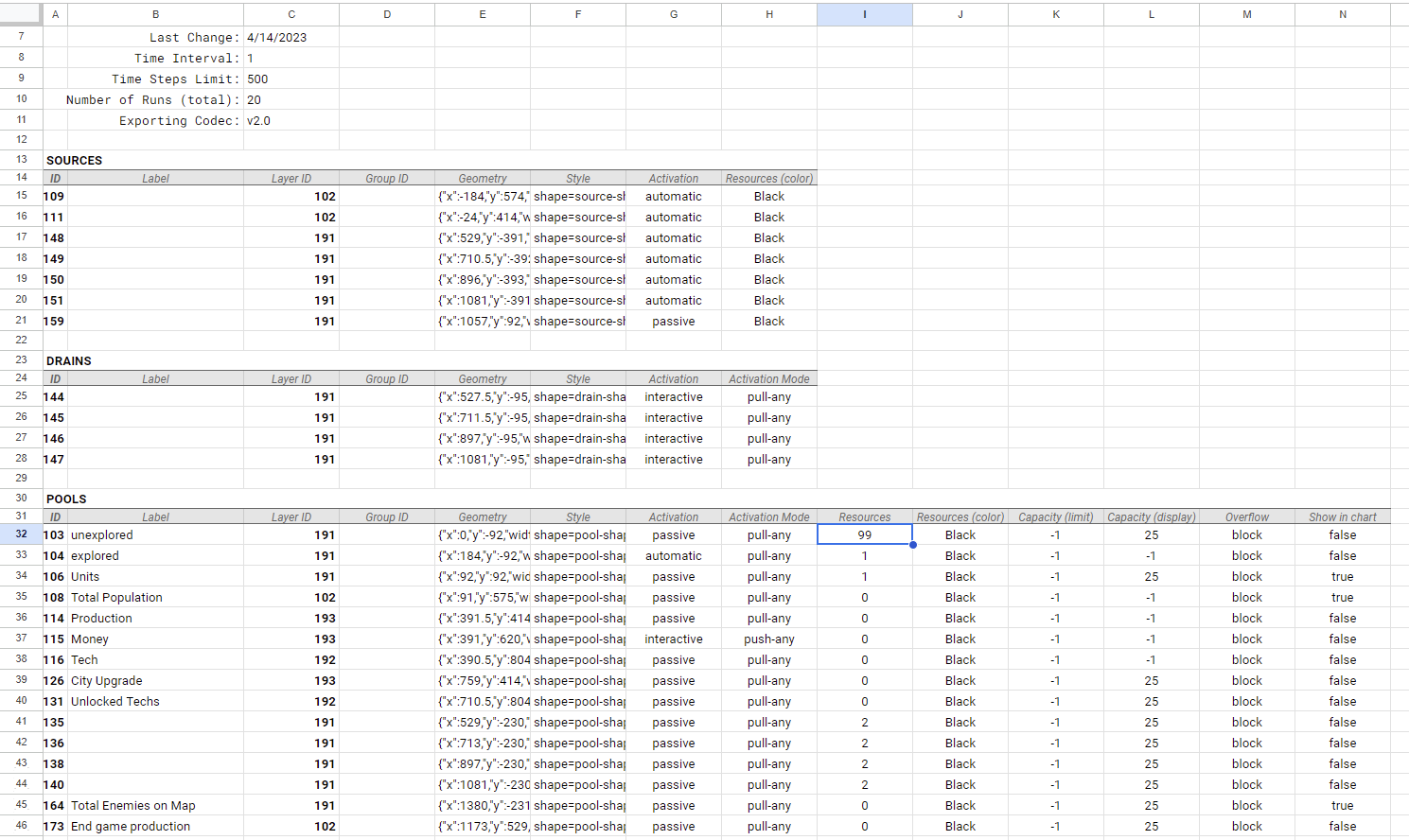
The exported spreadsheet
The exported diagram spreadsheet is a nicely organized list of the components used in your diagram, such as Diagram Properties, Sources, Sinks, Pools, Gates, Converters, Registers, End Conditions, Resource Connections, State Connections, and Layers.
Each of these components is listed with their Label, Value and other parameters. This enables you to modify the values of individual components.
E.g., change the number of Unexplored from 99 to 100.
Import from Google Sheets
Export and import with Google Sheets are separate steps. To see the effect of changes you made to the spreadsheet, you must import the diagram back into Machinations.
To import your diagram back into Machinations, click the arrow beside the diagram’s name to open the title menu and choose Import from Google Sheets. Then find and select the diagram spreadsheet you wish to import and hit okay.
When importing the spreadsheet you can choose between the options to Import in new diagram or Overwrite diagram.
After importing a Google Sheet you MUST Save the newly created file. Any changes you make after Import will not be saved if you close the tab without saving.
Long item lists and loot boxes
A loot box with many item drops is easier to keep in a spreadsheet than on the canvas. Keep the drop table in a Google Sheet and read it into the diagram as a parameter (called custom variable in older guides); see Public and private Google Sheets for the setup.