Collaborative Editing
Once you share your diagram with your peers, you can make live changes to it like in Google Suite. This makes collaboration much easier and allows you to work on Diagrams as a team, developing and sharing ideas in Real-time.
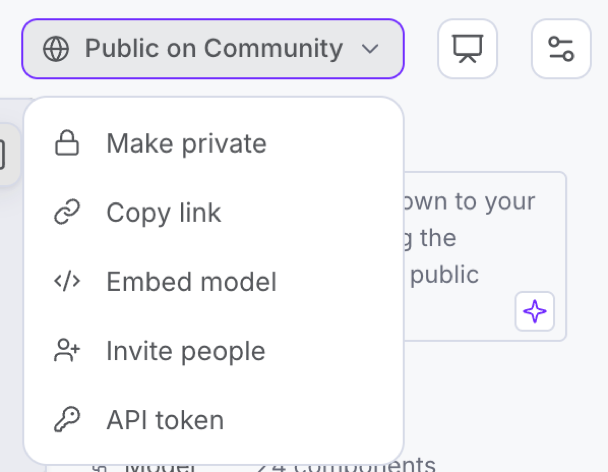
How to Share Diagrams
The sharing menu, at the top right of the editor, is where you manage who can open a diagram. Its button names the diagram’s current privacy: Only me, Shared with my team, Shared with specific people, Anyone with the link or Public on Community. The menu offers Make private (or Make public), Copy link, Embed model, Invite people and API token (a Pro feature).
You can share your diagram with your peers in two different ways.
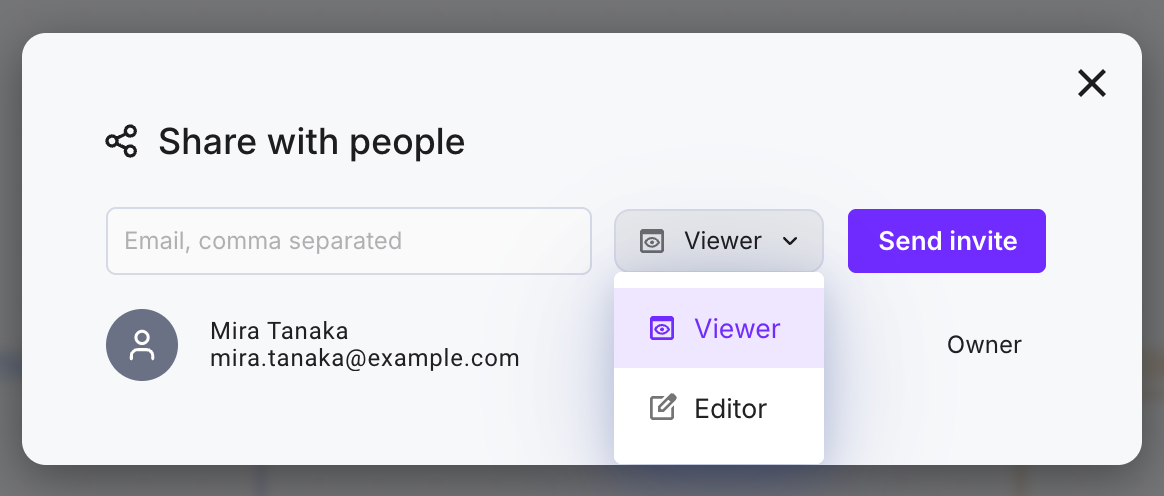
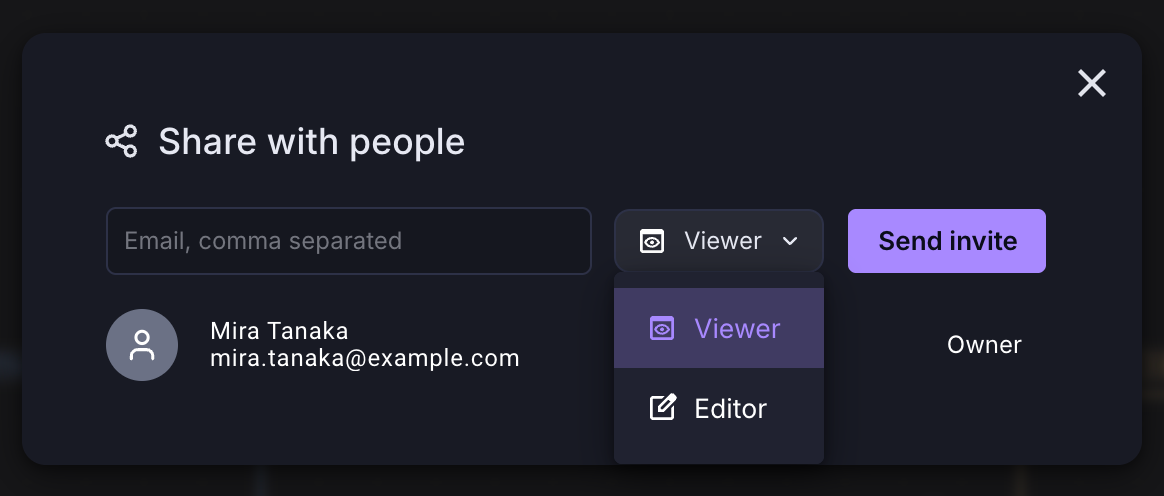
- Share with people using their email address. You may select one of two access permissions (Viewer or Editor). To share the diagram with specific accounts, follow the steps listed below:
- Open the sharing menu in the top-right corner and choose Invite people
- Type the email address(es) of your peer(s), separated by commas
- Choose the level of access, Viewer or Editor
- Click Send invite. The dialog stays open, with the field cleared, so you can invite someone else; it also lists the diagram’s owner and everyone who already has access.
- Copy link copies the diagram’s address. Who can open it depends on the diagram’s privacy, which you can read on the sharing button:
- Your team or invited users (Shared with my team, Shared with specific people)
- Anyone with the link, with no account or invite needed
- or everyone, when the diagram is Public on Community and listed where anyone can find and remix it
Live editing
While working together in collaborative mode, on any shared diagram, you can see every other editor’s pointer, with a small tag showing their name, and a component someone is editing shows their picture. Undo and Redo reverse only your own changes, never a teammate’s. These functionalities help editors identify components in large diagrams, improve presentations and live tutorials, and enhance the simultaneous construction of any model.
When peers open a shared diagram, an icon with their profile picture appears next to the sharing button.
Diagrams shared with you
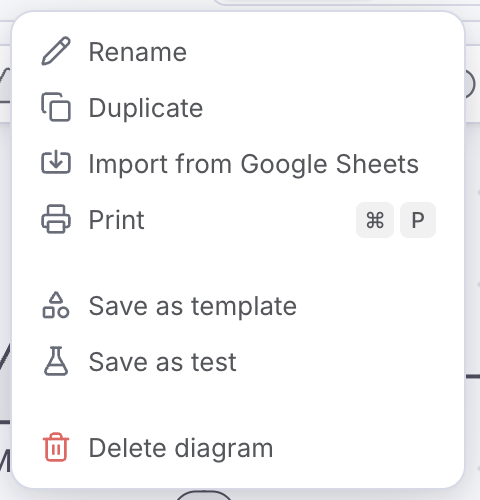
A diagram that is shared with you as Viewer opens as View only: the header says “View only: you can look around but not change anything” and offers a Remix button that makes a copy of the diagram for you to edit. This prevents you from overwriting other people’s work. To copy a diagram you can already edit, choose Duplicate in the title menu, the arrow beside the diagram’s name.
All diagrams someone has shared with you are listed under Shared with me, in the left rail, under My diagrams. Switch to the list view to see a table with the owner, the date shared, the date created, when it was last edited, how it is shared and who collaborates on it.
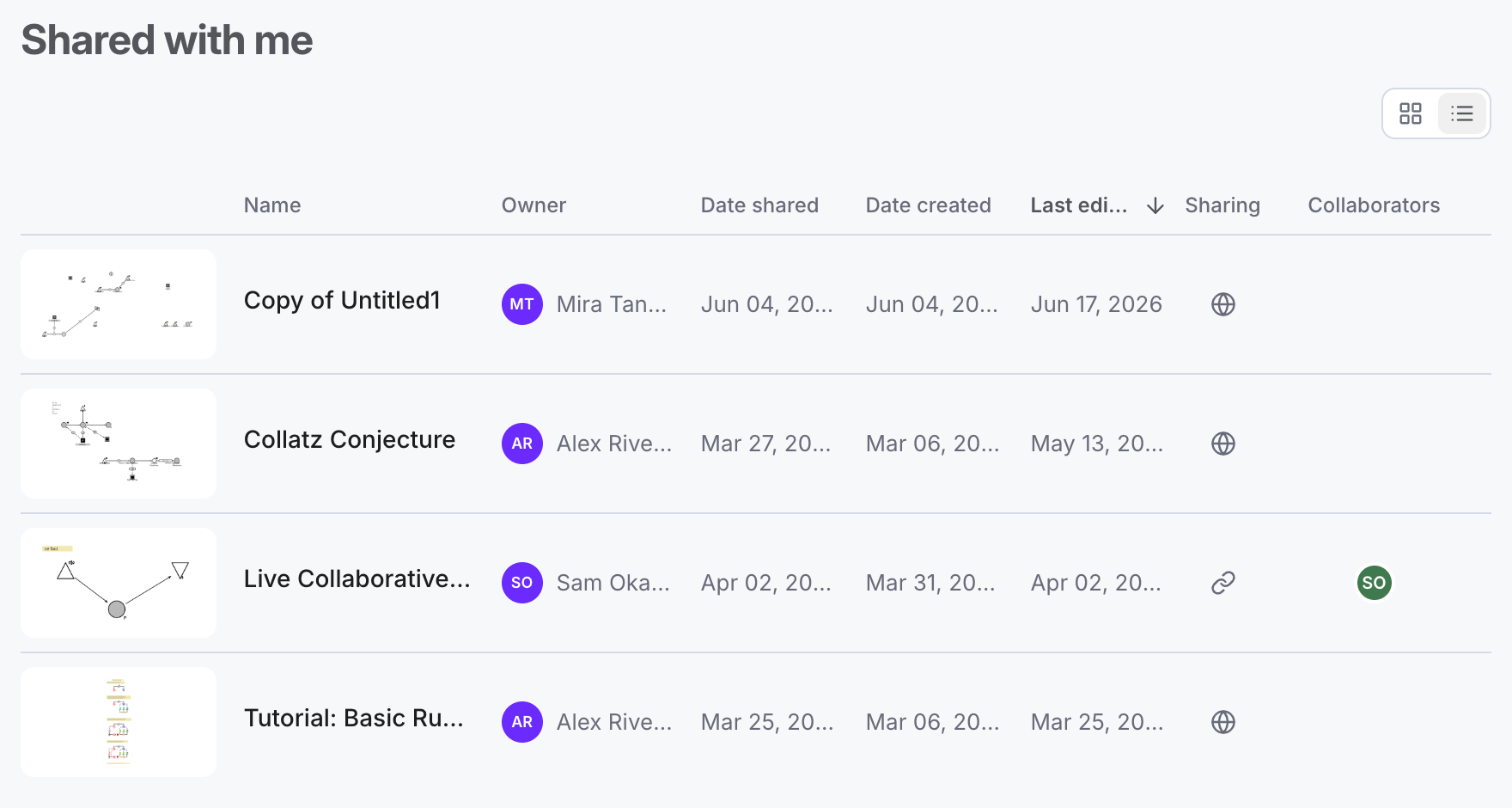
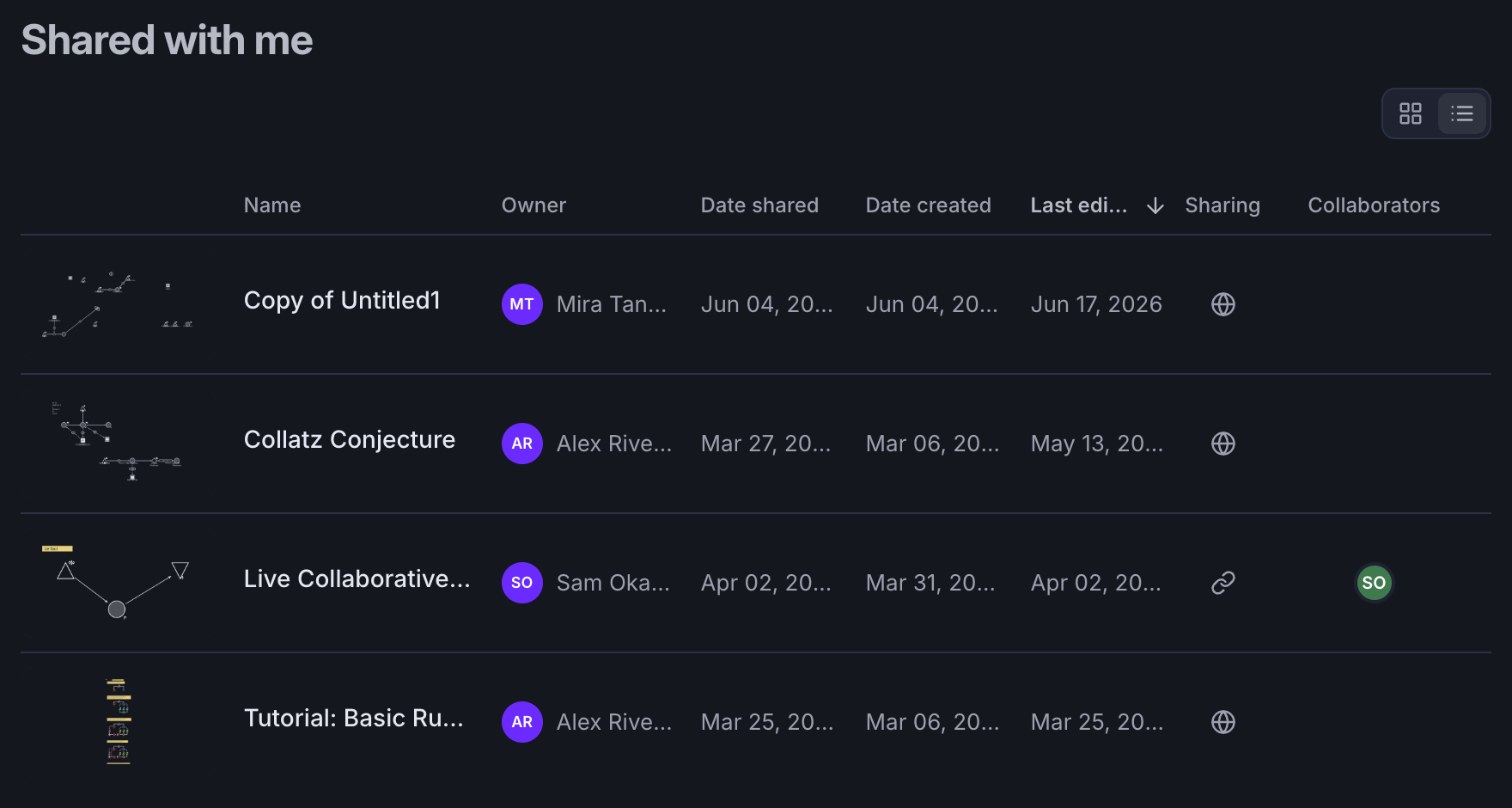
Diagram Share outside of a team
For confidential and private diagrams (included in the Starter and Pro plans), the Diagram Sharing option is limited to “View only” access to ensure that your important projects are not modified by mistake.
As such, if you want to share these diagrams with other collaborative designers, keep in mind that they cannot make changes to your canvas.
When accessing the shared diagram, the invited designer has two possible methods to add or modify nodes on your canvas:
- Upgrading your subscription to a Team-based plan – this will unlock the collaborative edit feature, and you will be able to modify the diagram, Play and Forecast it, and adjust parameters in real time.
- Make a Public copy of your Private Diagram – It is important to keep in mind that designers with whom you shared your work might copy your work and make their version public in our Community. As such, if you work on a confidential project, it is mandatory to share your diagrams only with trustworthy designers or colleagues from your Machinations team.
Public Diagram Share
For projects where confidentiality is not a requirement, the Diagram Sharing Option includes Edit rights as well. Regardless of whether you are subscribed to the Community, Starter, or Pro pricing plans, any user can share their Public diagrams with any editor.
It is important to keep in mind that once you set your diagram’s Privacy to Public on Community, your work will be visible (but not editable) from our Community. Set this sharing option only if you are not working with confidential data.
Version History
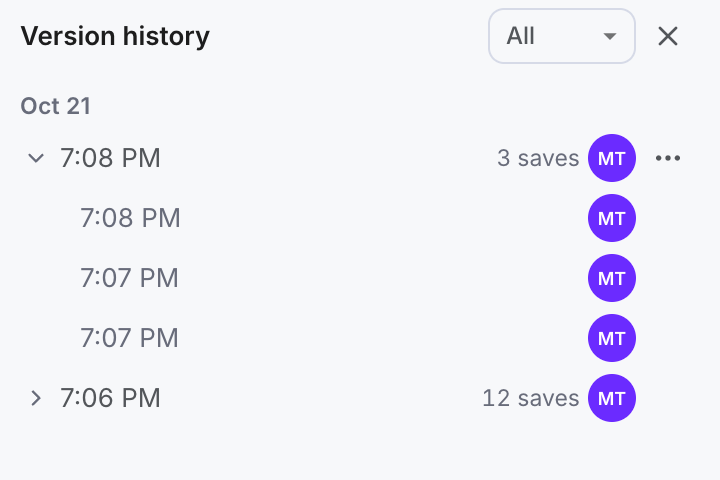
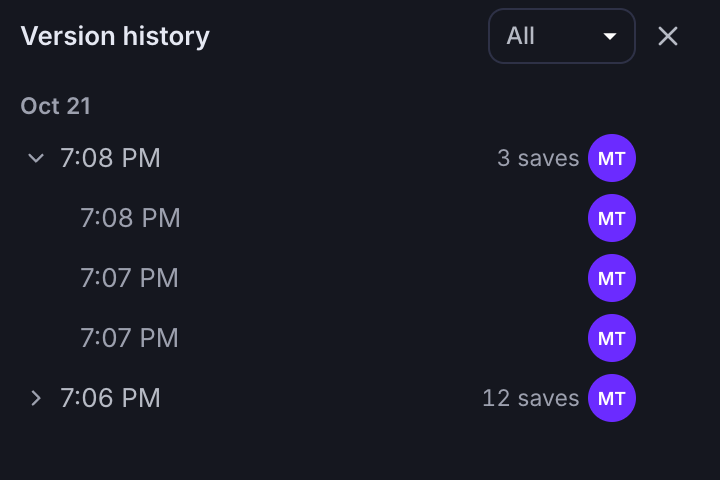
A diagram’s Version history opens from the History button in the header, beside the diagram’s name. The panel on the left lists the saved versions, and from it you can view, restore, rename, copy or delete a version. You can find more details in our History article.
The header shows a save indicator only when something goes wrong: Not saved means your last changes have not reached the server, and clicking it tries again. When everything is saved, nothing is shown.
Team Variables
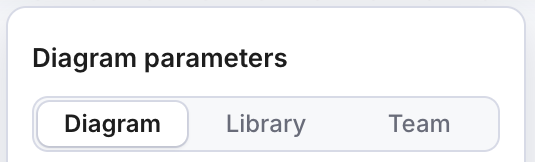
Parameters that are shared with your entire team are a great way to make sure that different designers use the same values. From game design document data and progression formulas to randomness types, team parameters keep all team diagrams on the same standard values. Open the Diagram parameters panel and use the Team tab beside Diagram and Library. To share a parameter you already have, open its menu and choose Copy to team.
Editing any field of a team parameter, such as its name or formula, changes it for every diagram that uses it. Let your team know before you change a team parameter.
Do not worry if you delete a team parameter by mistake. When a team parameter is deleted, a copy of it is added to any diagram that uses it.