Systems design diagrams are essential tools for understanding, planning, and optimizing complex processes and interactions.
Machinations provides a powerful platform for creating dynamic, interactive systems design diagrams across various domains.
What is a system diagram?
A system diagram is a visual representation that maps out how different components interact within a complex process or organization.
Unlike basic flowcharts, these diagrams typically show:
- Multiple parallel processes
- Resource flows and constraints
- Feedback loops and dependencies
- Performance metrics and KPIs
- Decision points and conditions
- Input/output relationships
System diagrams help teams understand complex workflows, identify bottlenecks, and optimize processes.
They’re commonly used in fields like software architecture, manufacturing, business operations, and game design.
System Diagram Examples
Here are nine types of diagrams you can create, with real-world examples demonstrating the platform’s versatility.
1. Game Economy Systems
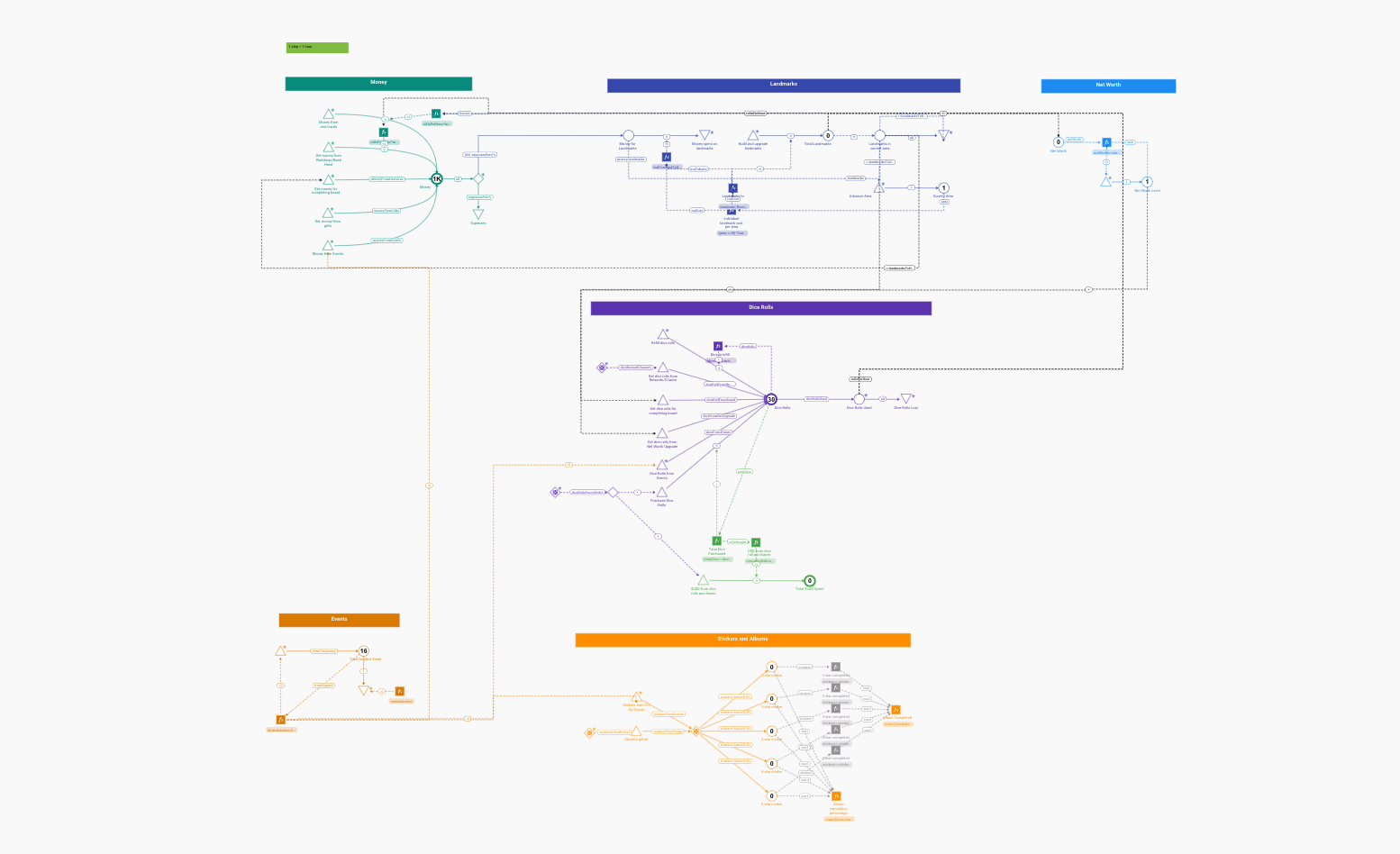
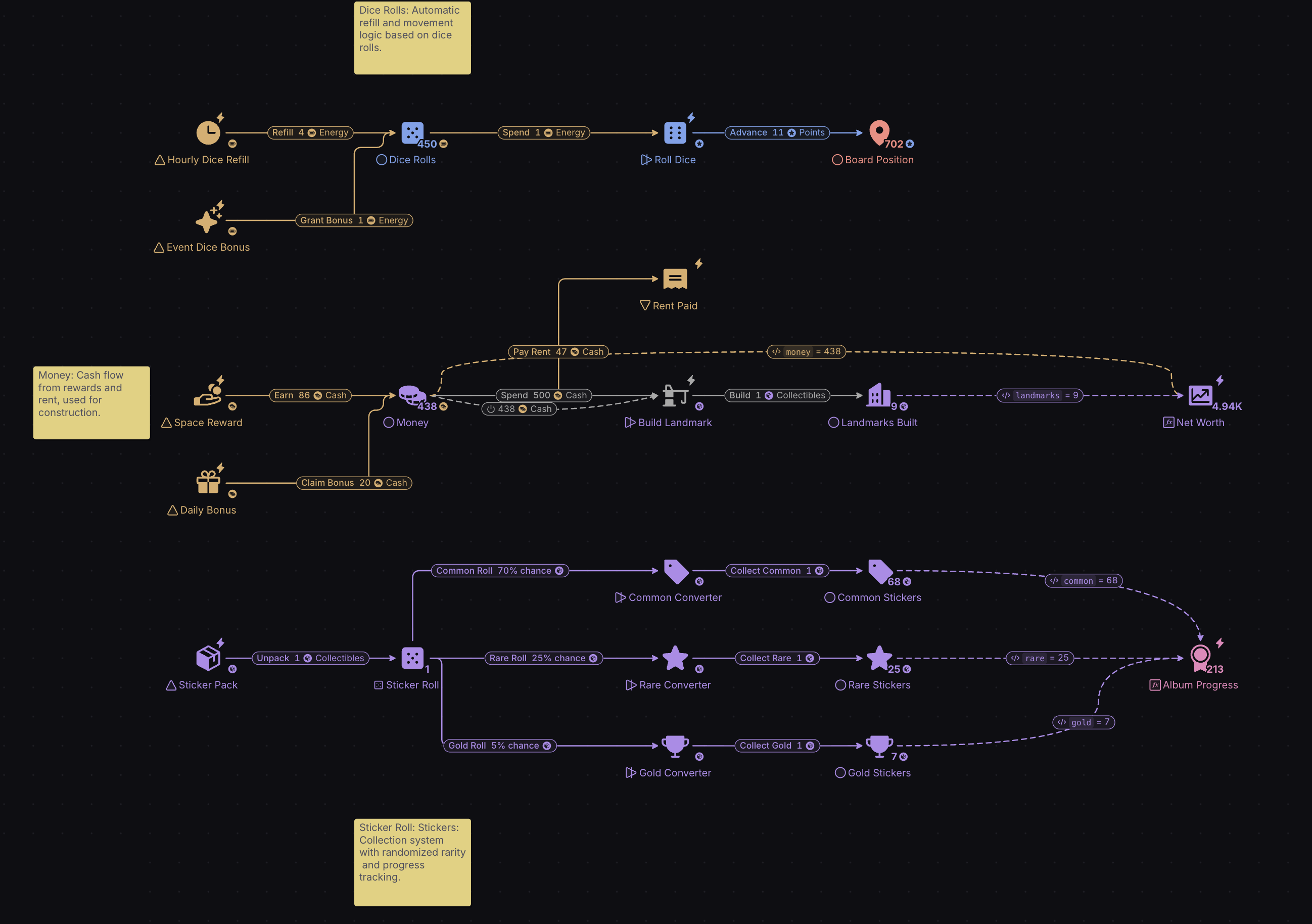
View this diagram: Monopoly Go Simulation
This comprehensive diagram shows how to model:
- Multiple interconnected gameplay systems
- Resource flows and exchanges
- Player progression mechanics
- Event-based rewards
- Economy balance mechanisms
- Player interaction systems
- Monetization flows
2. Strategic Decision Systems
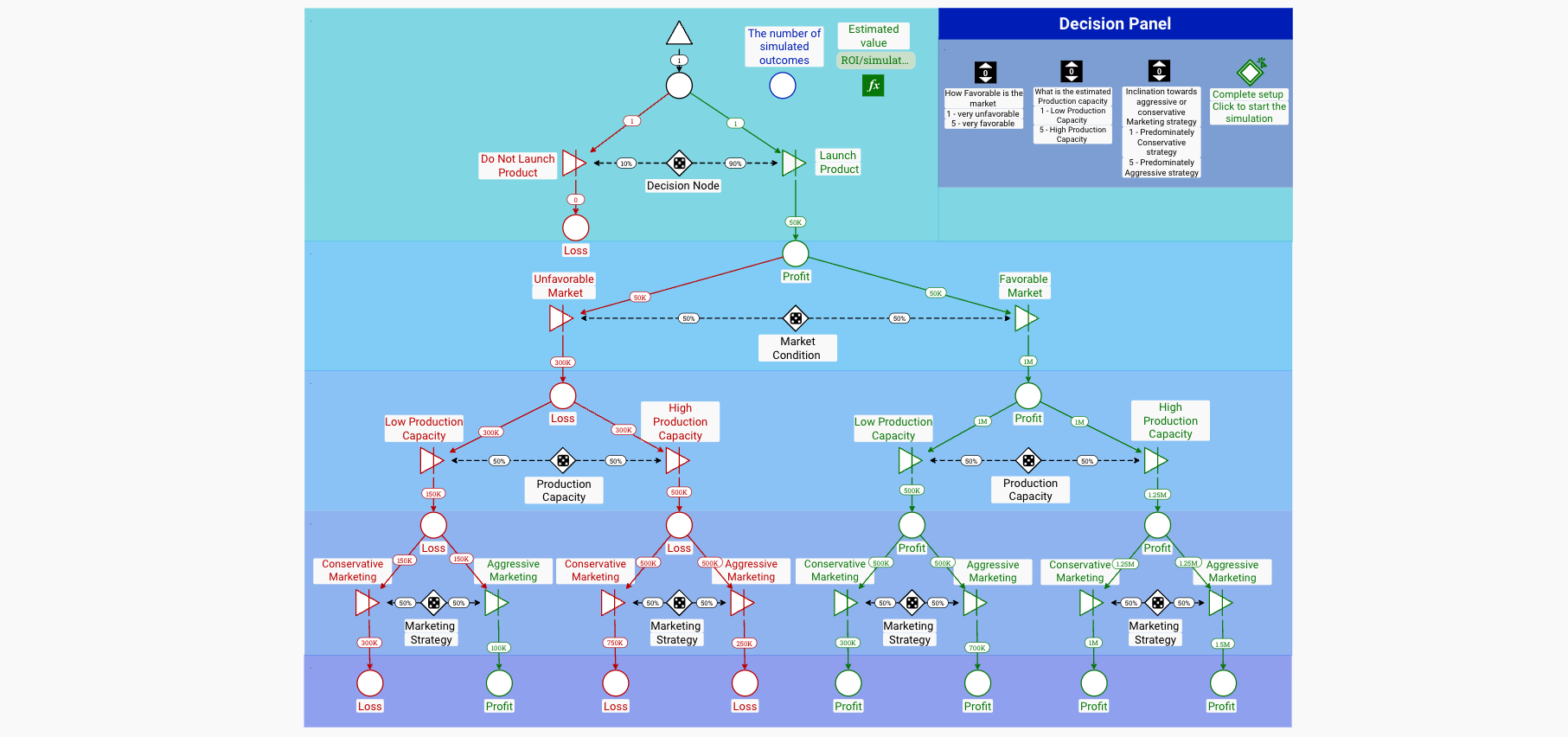
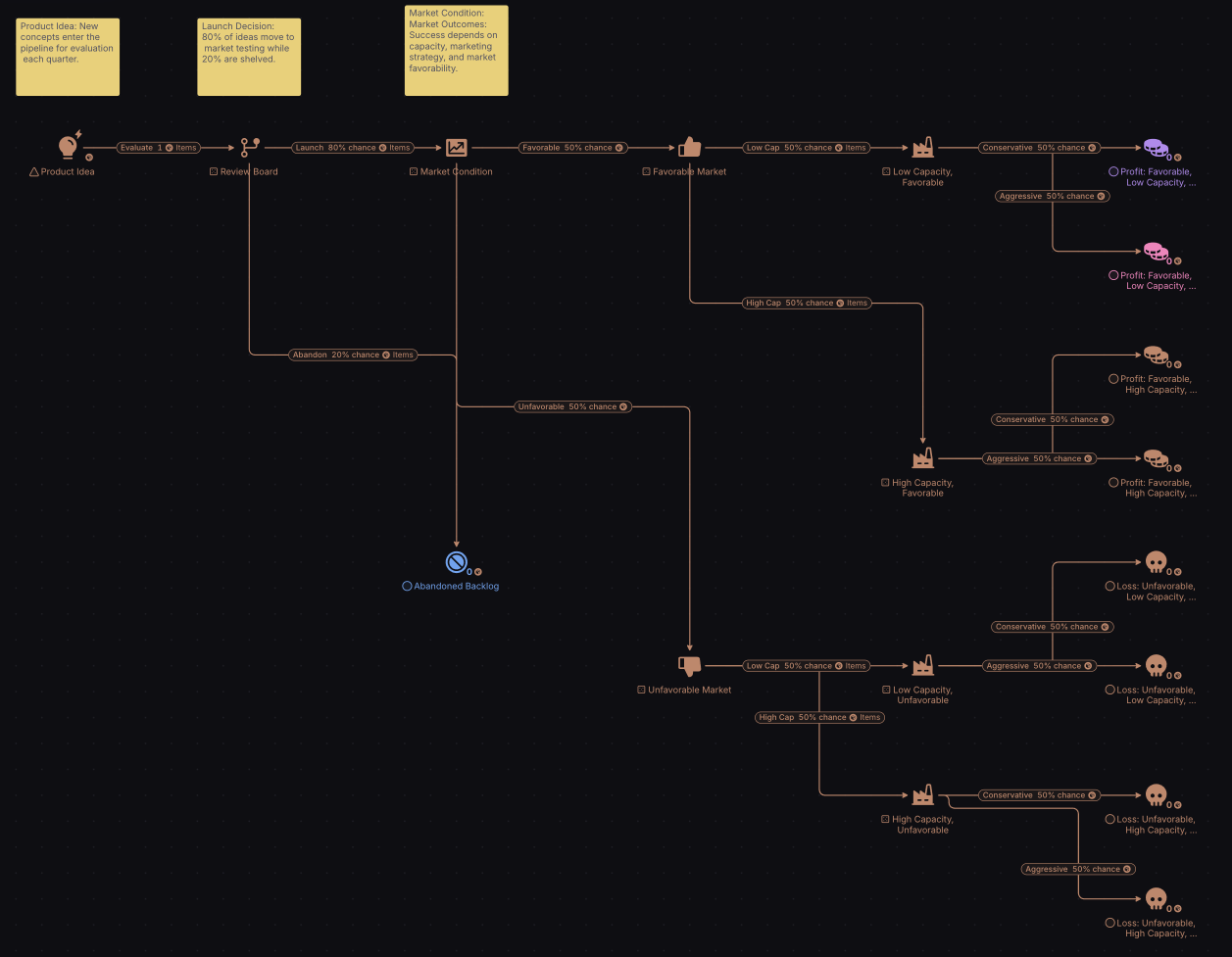
View this diagram: Strategic Decision Systems
This diagram example demonstrates modeling of:
- Complex decision paths
- Probability-based outcomes
- Resource allocation choices
- Risk assessment scenarios
- Market condition impacts
- Performance metrics tracking
3. Technical Infrastructure
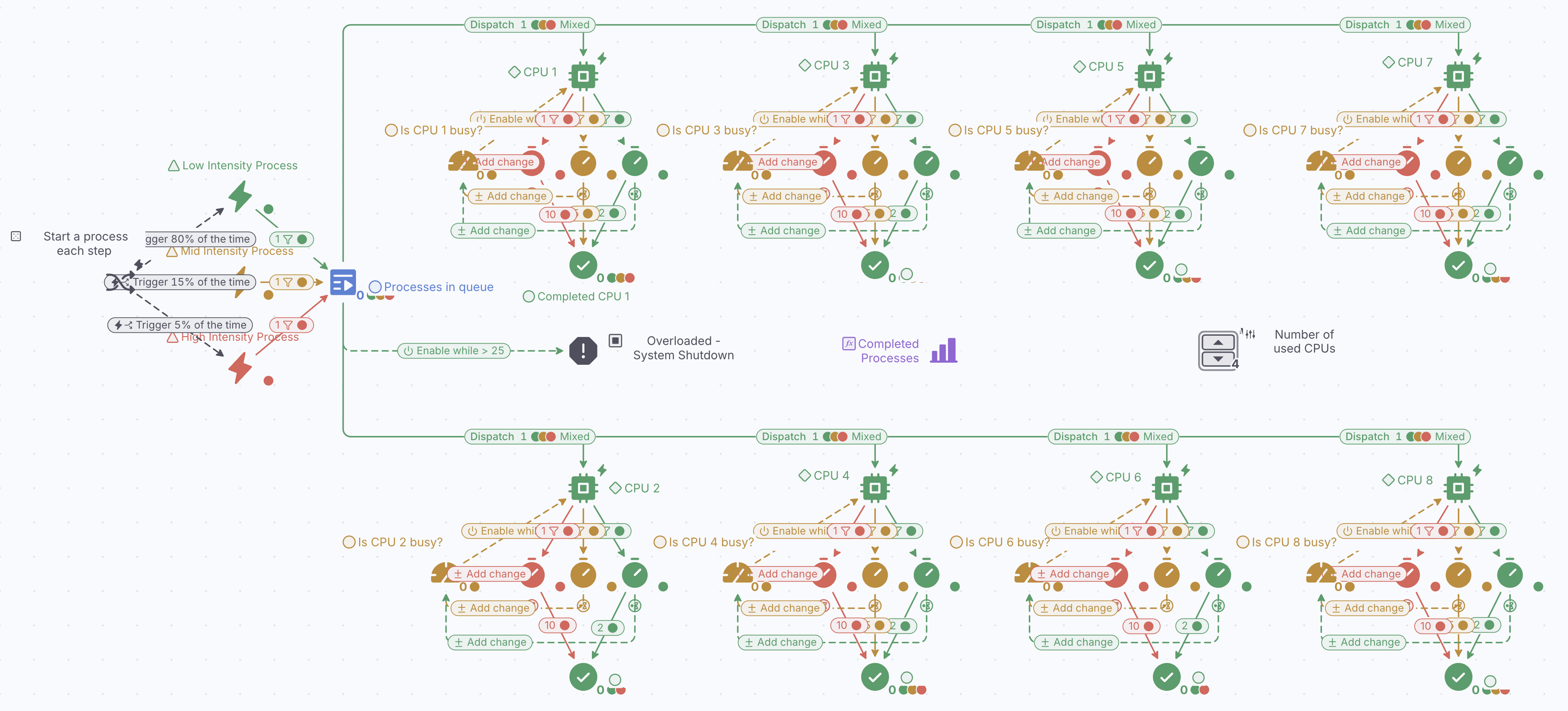
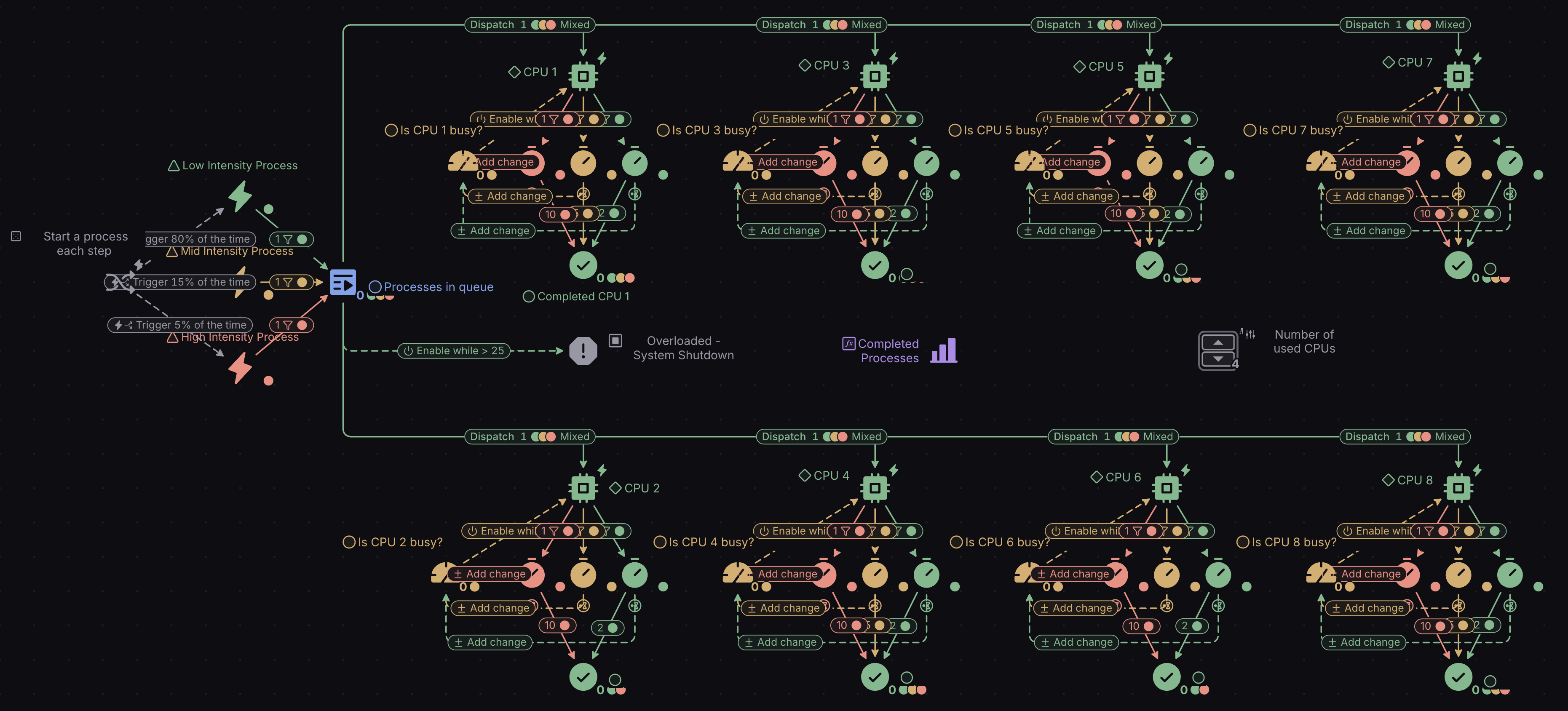
View this diagram: Data Center Resource Management
This diagram example illustrates:
- Resource allocation systems
- Load balancing mechanisms
- System capacity management
- Performance monitoring
- Error handling processes
- Queue management
4. Learning Progression Systems
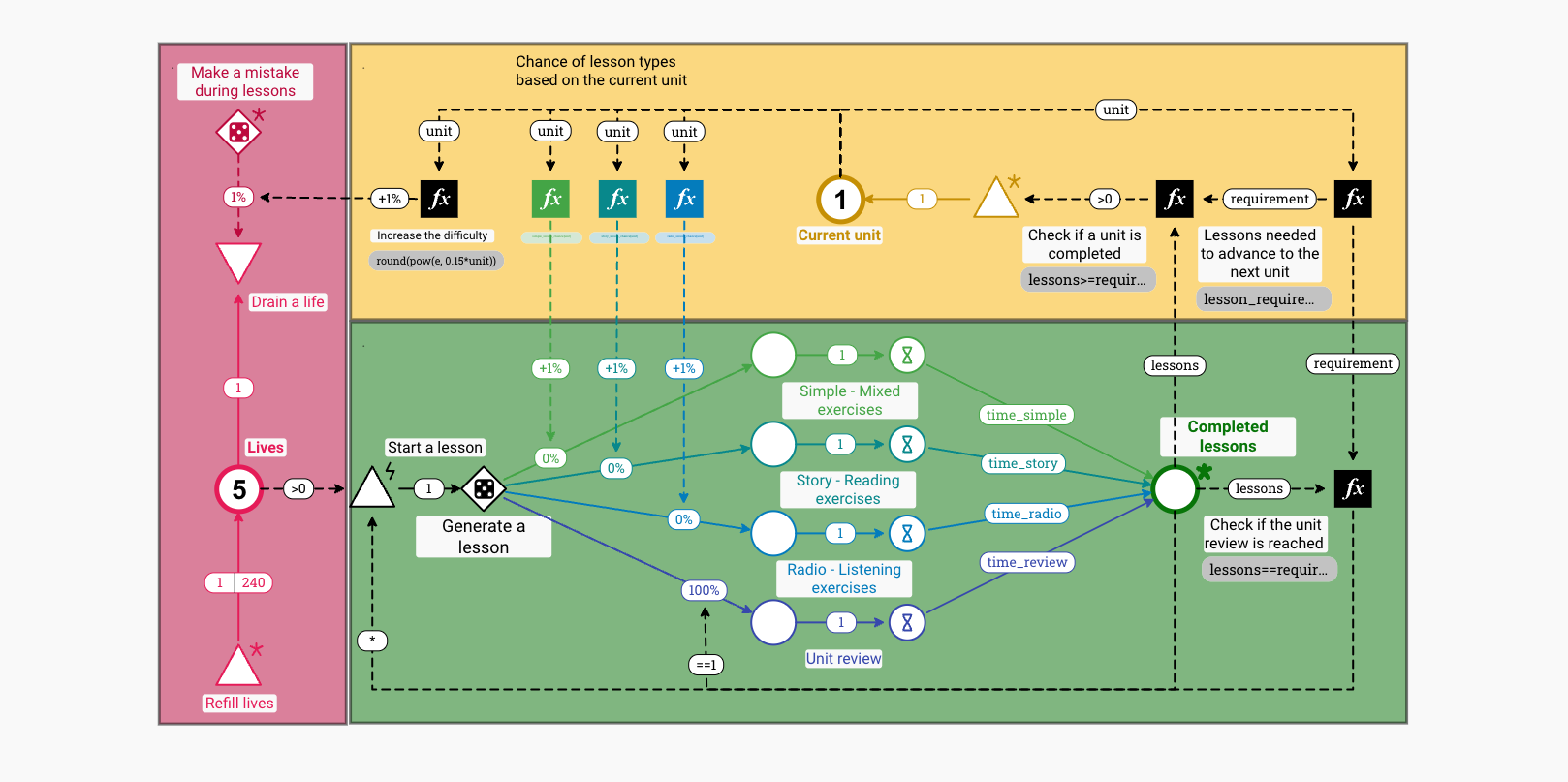
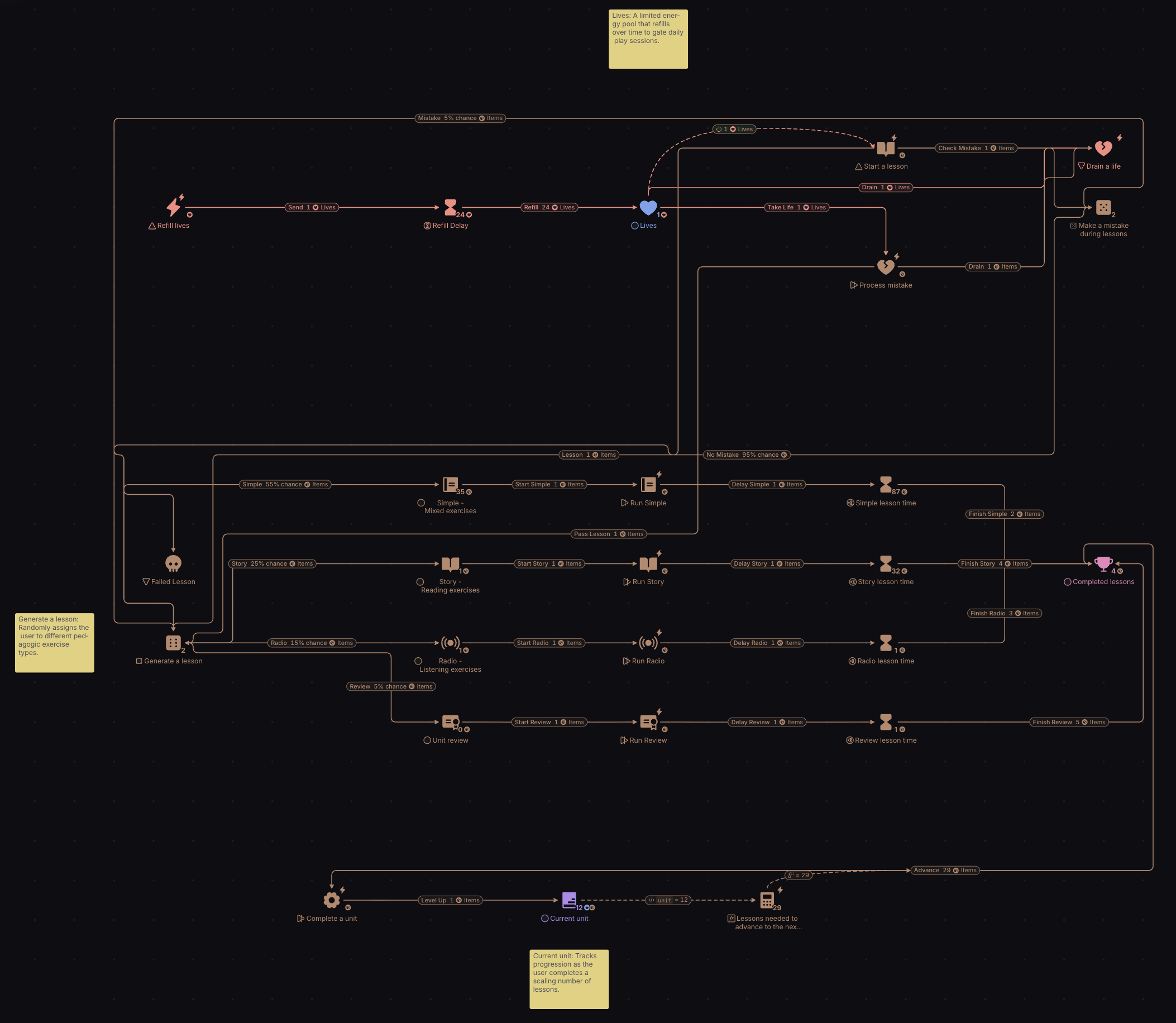
View this diagram: Duolingo Progression Model
This great Duolingo lesson progression diagram illustrates:
- Skill advancement paths
- Content difficulty scaling
- Progress tracking mechanisms
- User engagement systems
- Achievement mechanics
- Error recovery processes
5. Manufacturing Processes
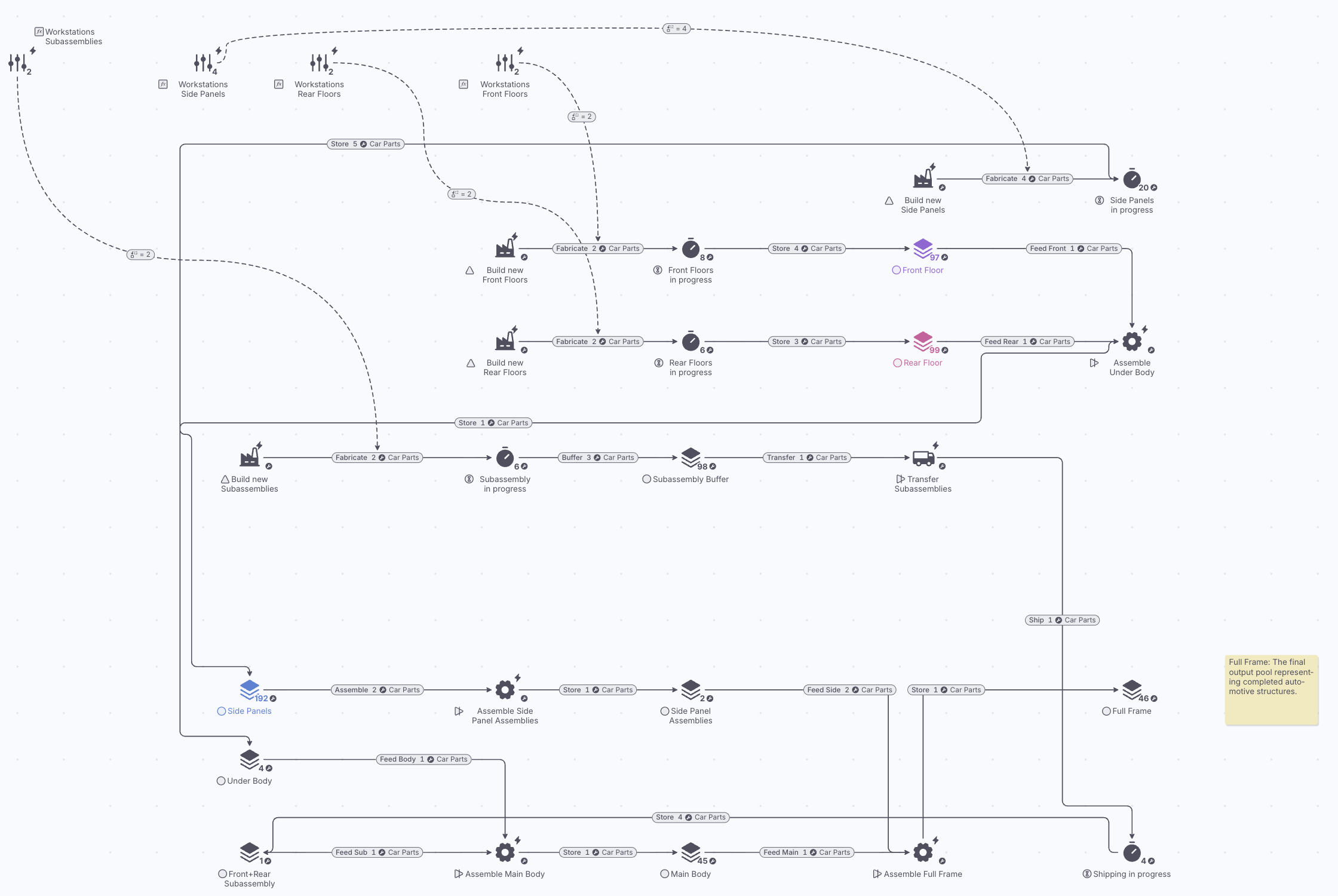
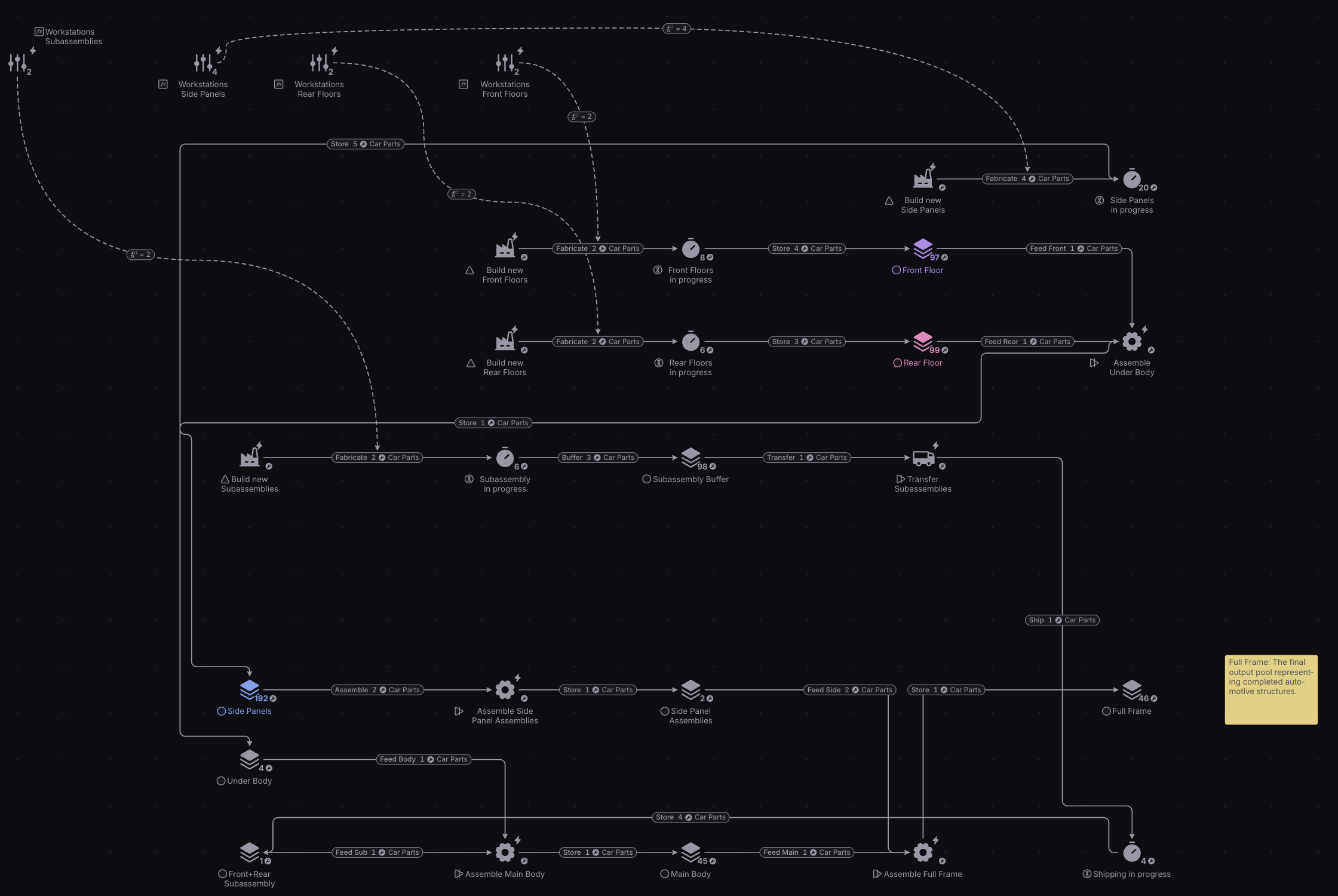
View this diagram: Manufacturing System
This diagram demonstrates how the following work:
- Production workflows
- Resource utilization
- Assembly line balancing
- Quality control points
- Capacity management
- Process optimization
6. Customer Service Flows
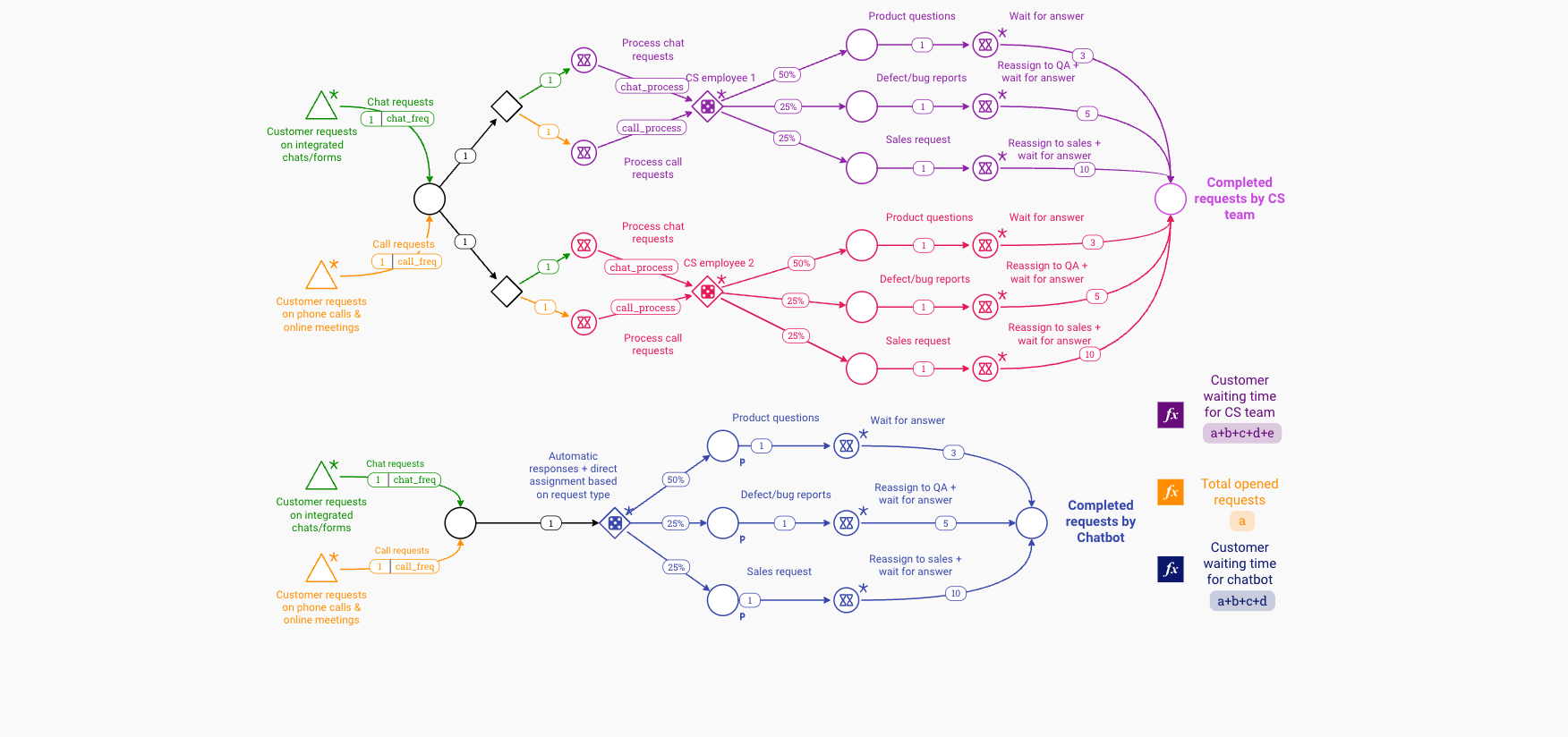
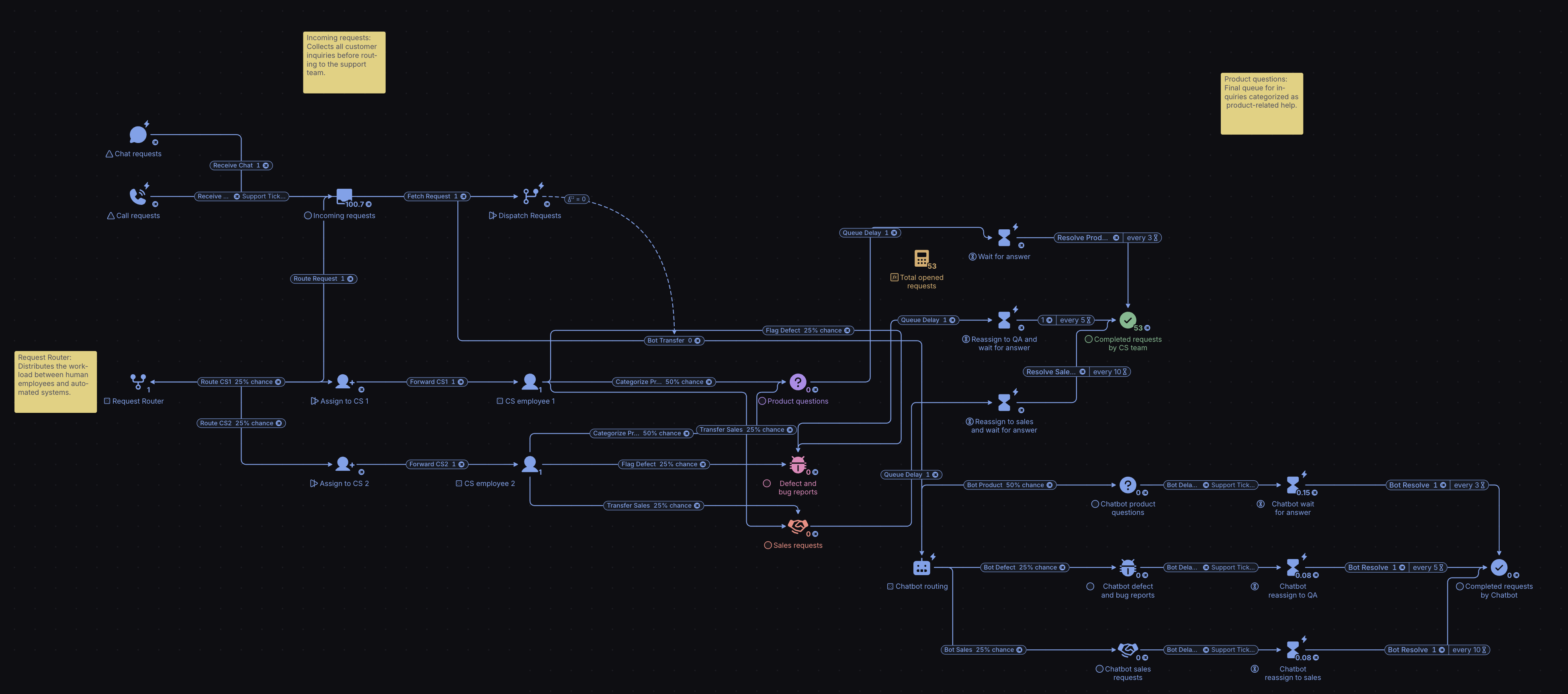
View this diagram: BPM Process Automation
This BPM diagram example illustrates:
- Service request handling
- Resource allocation
- Queue management
- Response time optimization
- Performance tracking
- Automation integration
7. User Acquisition Systems
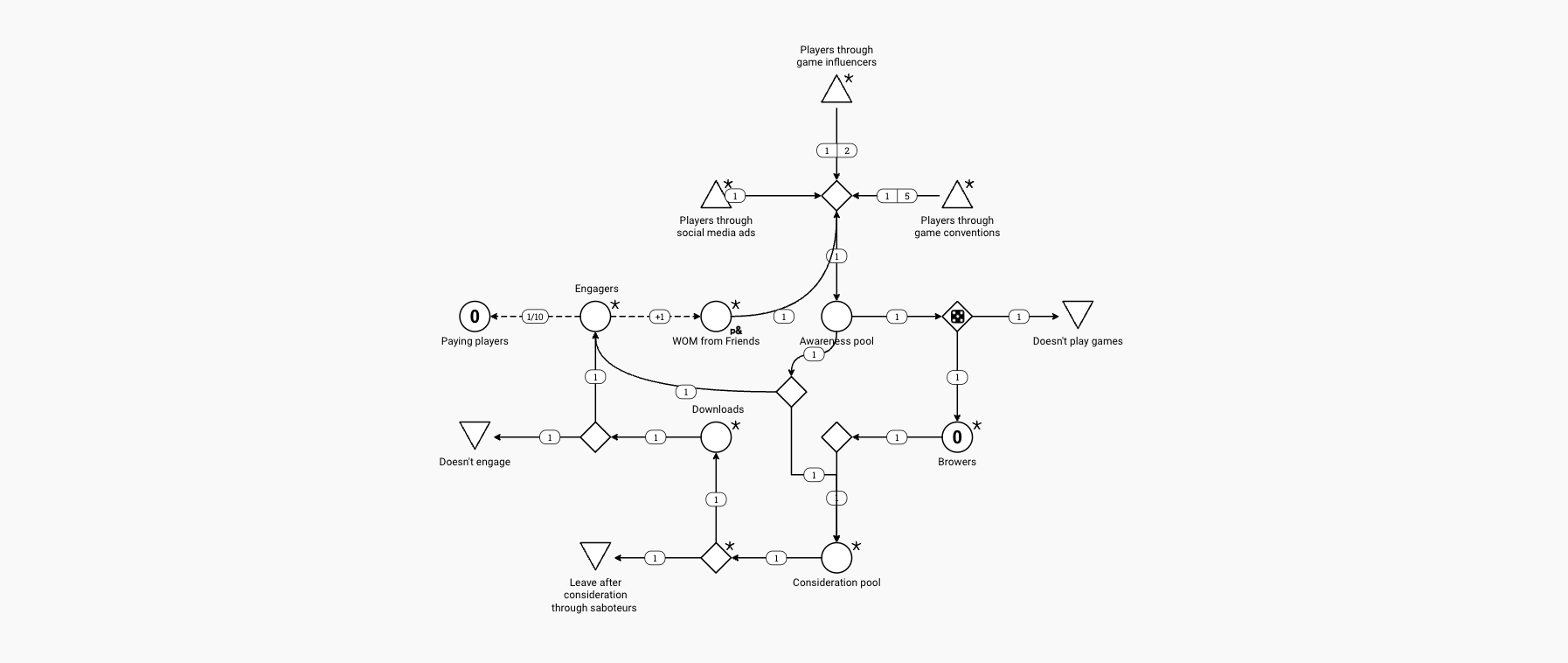
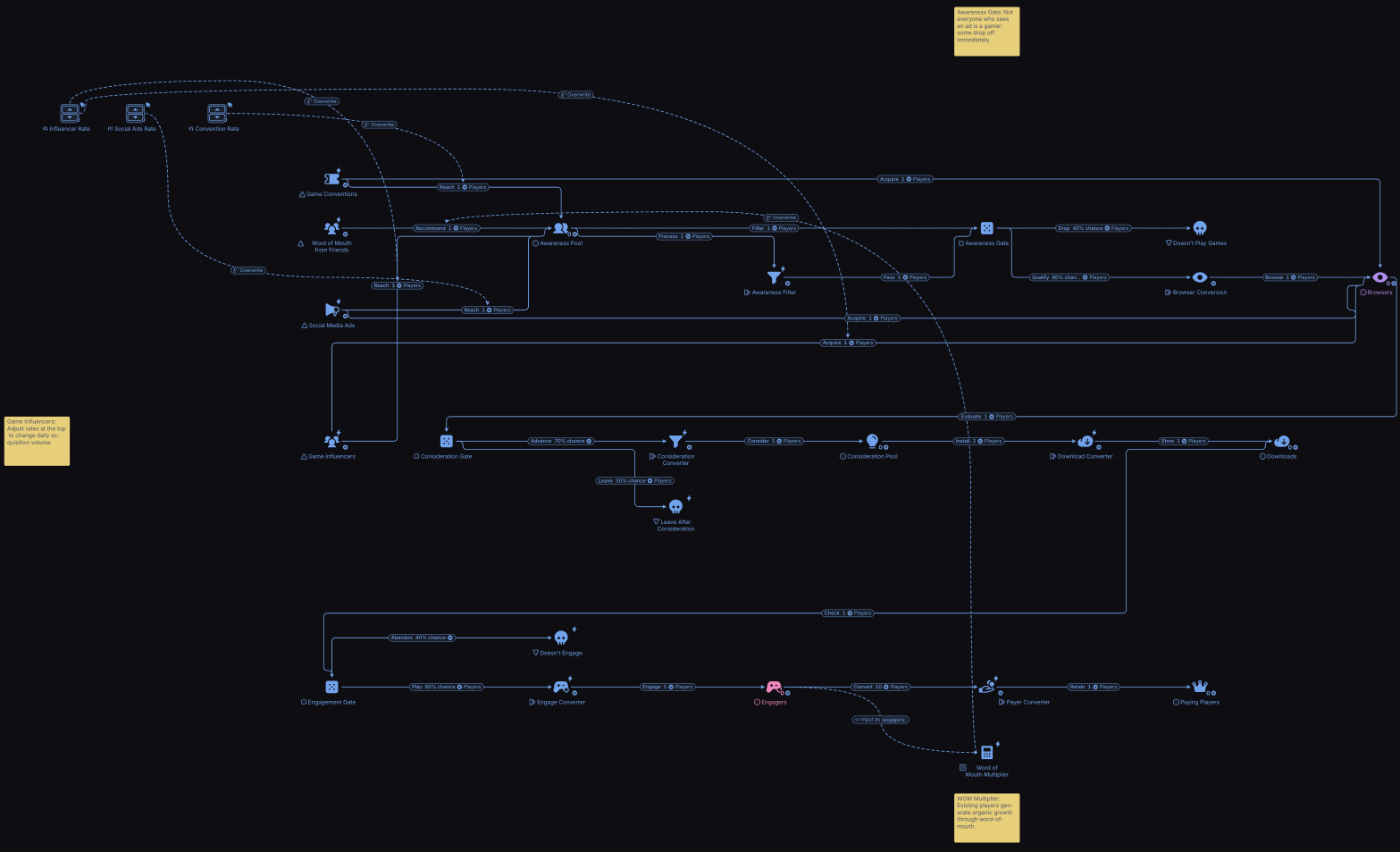
View the published diagram image: Customer Acquisition Diagram.
This one illustrates:
- Multiple acquisition channels
- Conversion funnels
- User journey mapping
- Drop-off analysis
- Retention mechanics
- Performance metrics
8. Revenue Distribution Systems
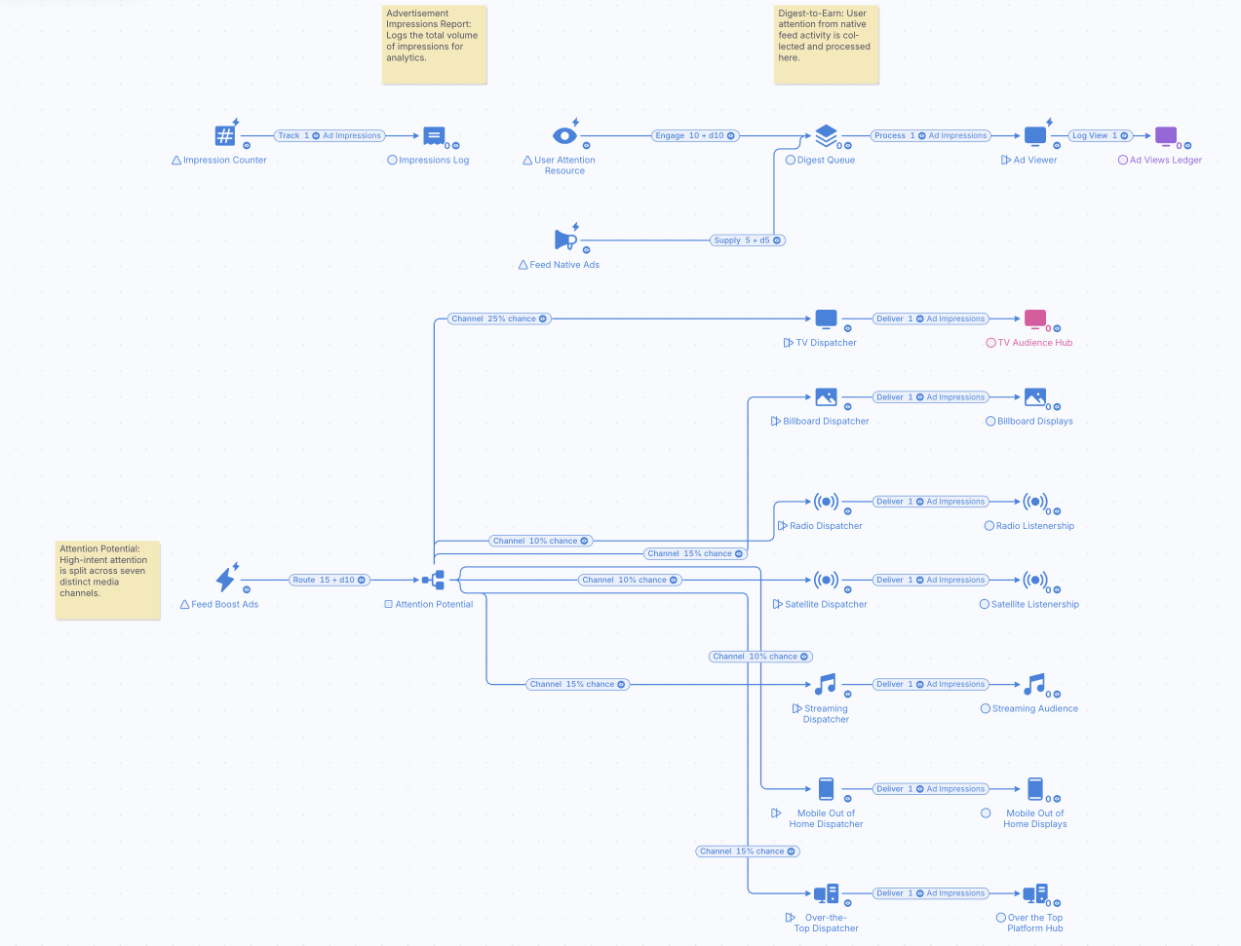
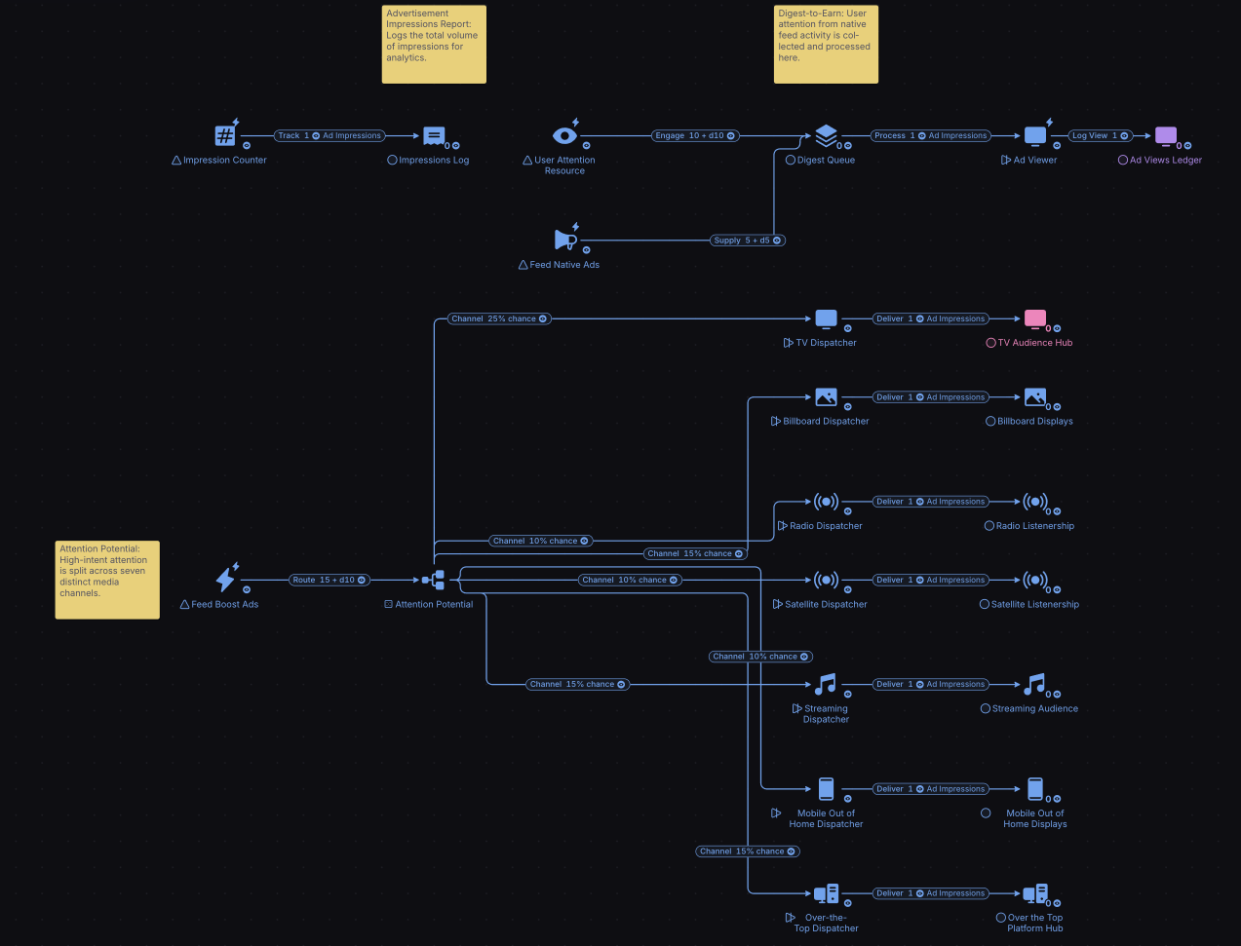
View this diagram: Advertising Revenue Share
This diagram will show you how the following components interact:
- Multiple revenue streams
- Resource distribution
- Performance tracking
- Payment processing
- Revenue sharing rules
- Market dynamics
9. Competitive Rating Systems
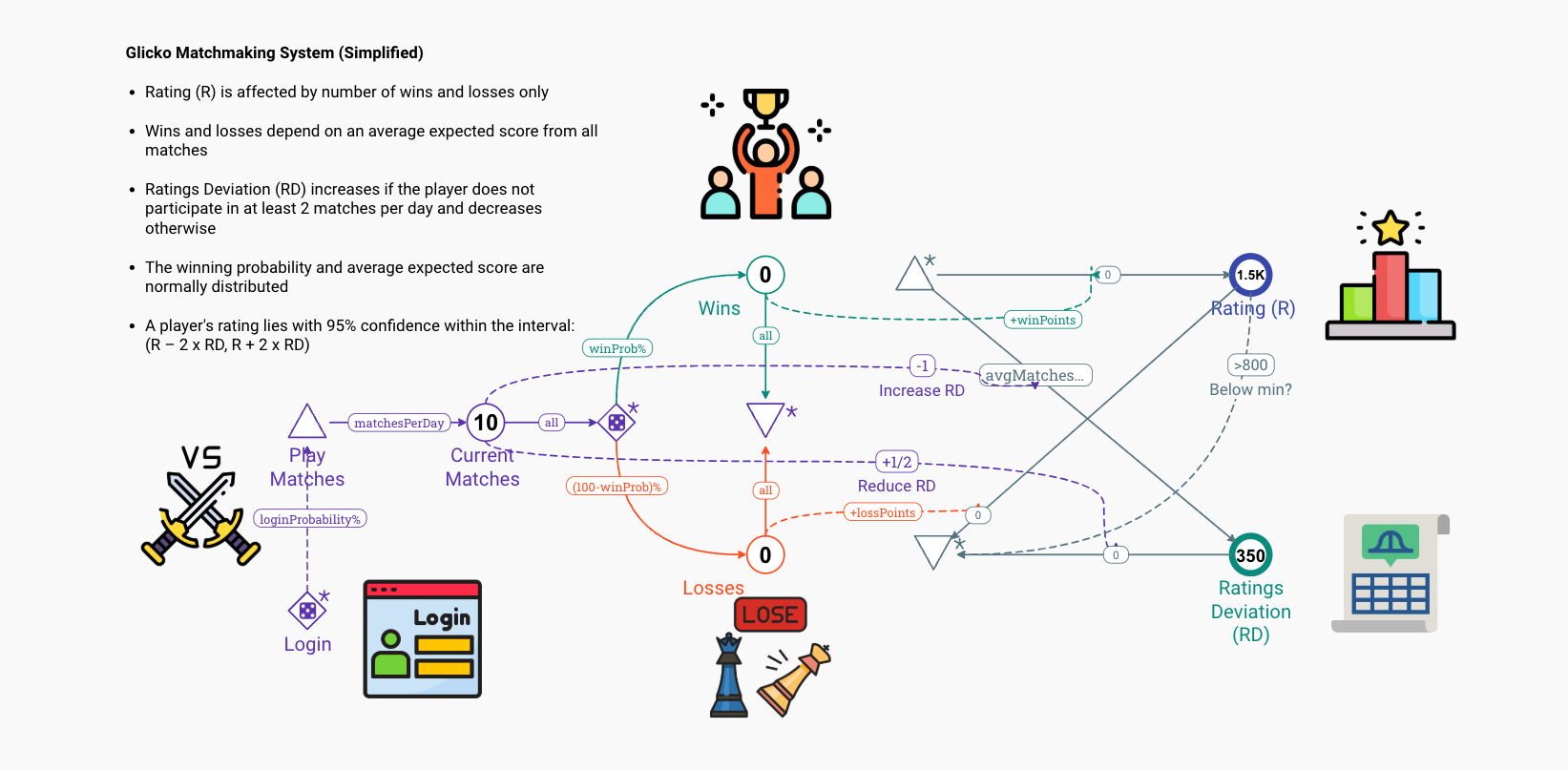
View this diagram: Glicko Matchmaking
This matchmaking diagram teaches you about the following:
- Performance rating calculations
- Matchmaking mechanics
- Skill level tracking
- Confidence intervals
- Balance mechanisms
- Competition dynamics
Why Choose Machinations for System Modeling?
1. Versatility
- Models any type of system
- Handles complex interactions
- Supports multiple domains
- Adapts to various needs
2. Dynamic Simulation
- Real-time testing
- Interactive modeling
- Scenario planning
- Performance analysis
3. Visual Clarity
- Clear system representation
- Intuitive interface
- Easy to understand
- Effective communication
4. Analysis Capabilities
- Performance tracking
- System optimization
- Balance testing
- Impact analysis
Why Should You Use Machinations to Simulate Complex Systems
Machinations is a great tool for modeling complex systems across various domains.
Whether you’re designing game economies, planning manufacturing processes, or optimizing service flows, its robust features and intuitive interface make it an invaluable tool for system design and analysis.
The platform’s ability to create interactive, dynamic models that simulate real-world behavior makes it essential for:
- Game designers
- Business analysts
- Process engineers
- System architects
- Education designers
- Operations managers
By providing a unified platform for diverse system modeling needs, Machinations enables better understanding, planning, and optimization of complex systems in any field.