Strategic planning modeling software
Use a shared visual model to make key assumptions and feedback visible to the people weighing different courses of action on connected systems over time.
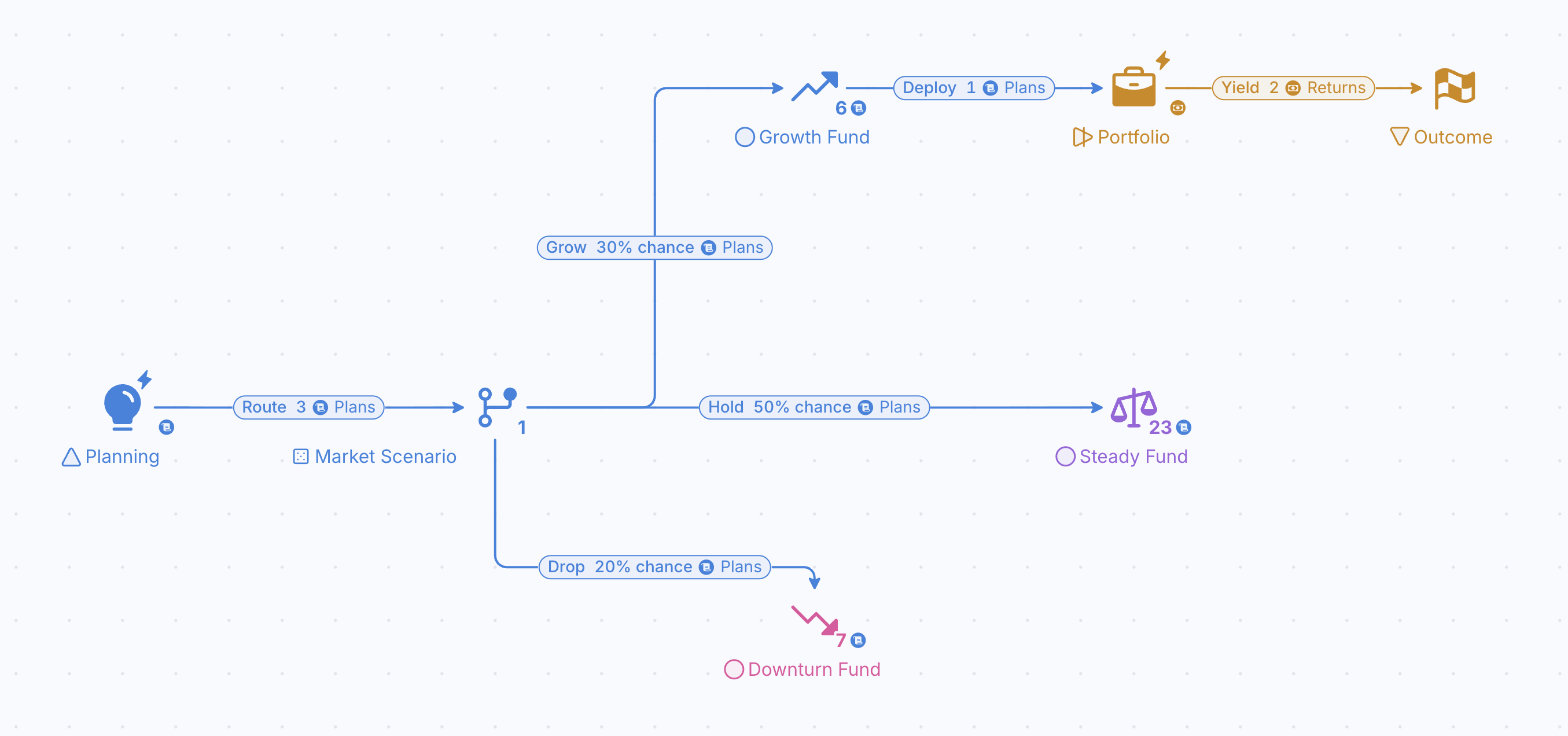
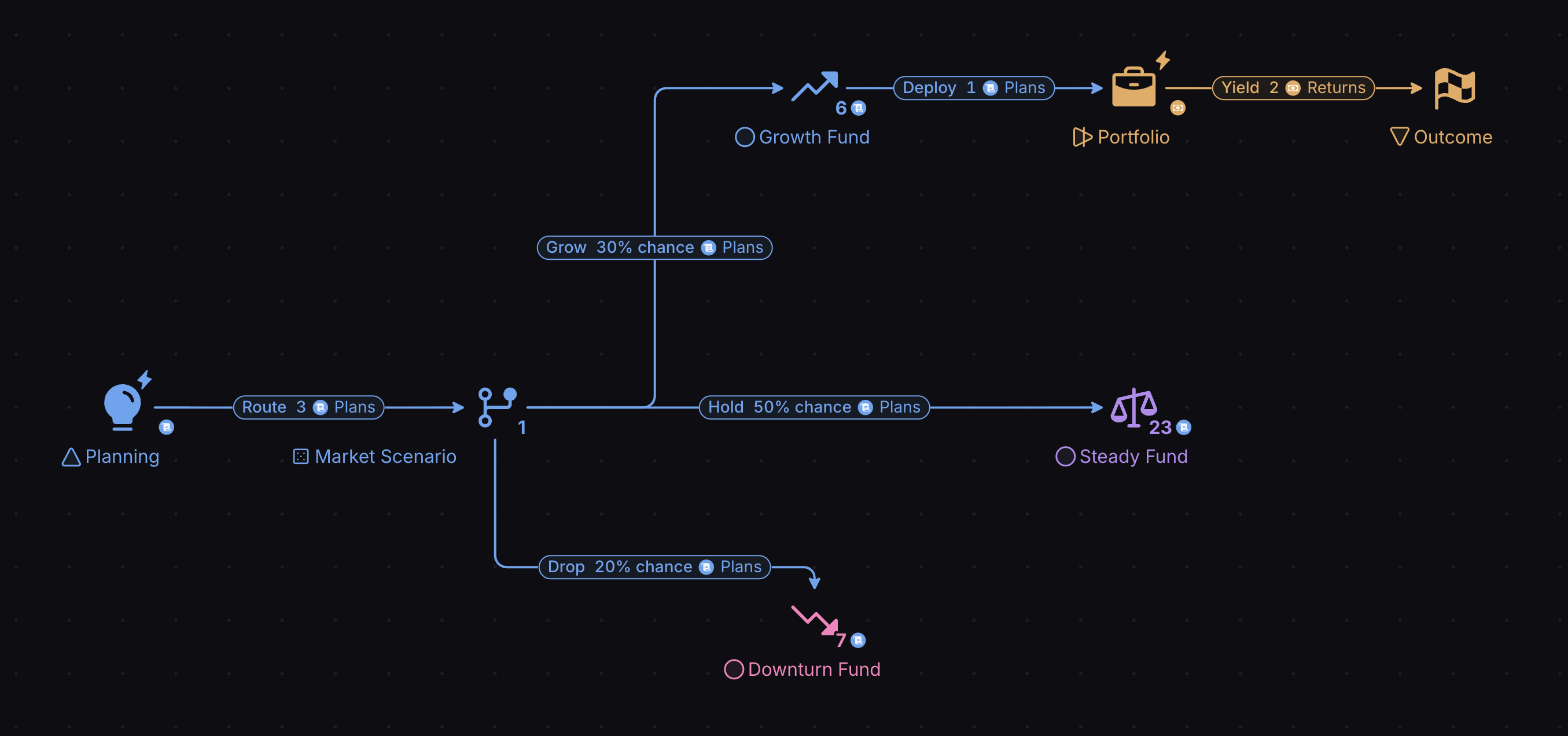
Model, visualize, analyze, and refine your strategic decisions for superior outcomes and performance.
Design
Create playable diagrams for any system, regardless of complexity. Make feedback loops and economies easier to validate, communicate and understand.
Predict
Gain data-driven insights by employing out-of-the-box Monte Carlo simulations. Test what-if scenarios and measure their impact in a safe, virtual environment, with one click of the button.
Balance
Move the Levers of a model, Forecast what each change does and compare the Outcomes of every Scenario, so a system is balanced on evidence rather than trial and error.
What you can do with it
Scenario planning
Simulate future scenarios of market, regulatory and competitive change and their effect on business outcomes.
Resource allocation
Model how finances, people and time are allocated and compare allocation strategies.
Risk management
Simulate risk factors for projects and business operations and prepare mitigation strategies.
Product development and launch
Simulate customer feedback loops, production timelines and market acceptance to plan the go-to-market.
Financial forecasting
Simulate cash flow, investment returns and economic swings for budgets and investments.
Competitive analysis
Model competitor moves and market conditions and test strategic responses.
From Decisions to Success: Testing a Strategy Before You Commit
Strategic decision-making aligns long-term and short-term goals with the company’s mission, and it makes short-term decisions traceable to their longer-term consequences.
A clear process streamlines evaluation, eases stress and brings more diverse thinking and shared ownership to the team. Executives spend around 40% of their time making decisions, so a good framework matters. The most popular ones are SWOT, PESTLE, Porter’s Five Forces, the McKinsey 7S Model, the OODA Loop and Decision Trees.
A model adds what those frameworks lack: you can Play the strategy and Forecast its range of outcomes before you commit. The same approach works for policy impact assessment, where the question is what a rule change does to the system over time.
This model plays out a three-year strategy. A monthly budget is split between new markets, product R&D and efficiency; new markets win market share after a launch delay while competitors take some back, R&D builds product strength, and profit flows back into the budget. Move the four Levers (marketing spend ($/month), campaign lead time (months), R&D share (%) and expense cut (%)) and watch the budget, market share and product strength respond over the 36 months.
Compare the strategies before you choose one
Model the market, your resources and the rules that link them, then Forecast each option side by side.
- ISO 27001 certified
- SSO & SAML
- GDPR compliant
- Trustpilot verified
- Red Herring Top 100
- Dealroom Rising Star