Asset management modeling software
Make assumptions and dependencies about returns, liquidity and exposure visible, so teams can discuss a portfolio or resource plan with a shared model.
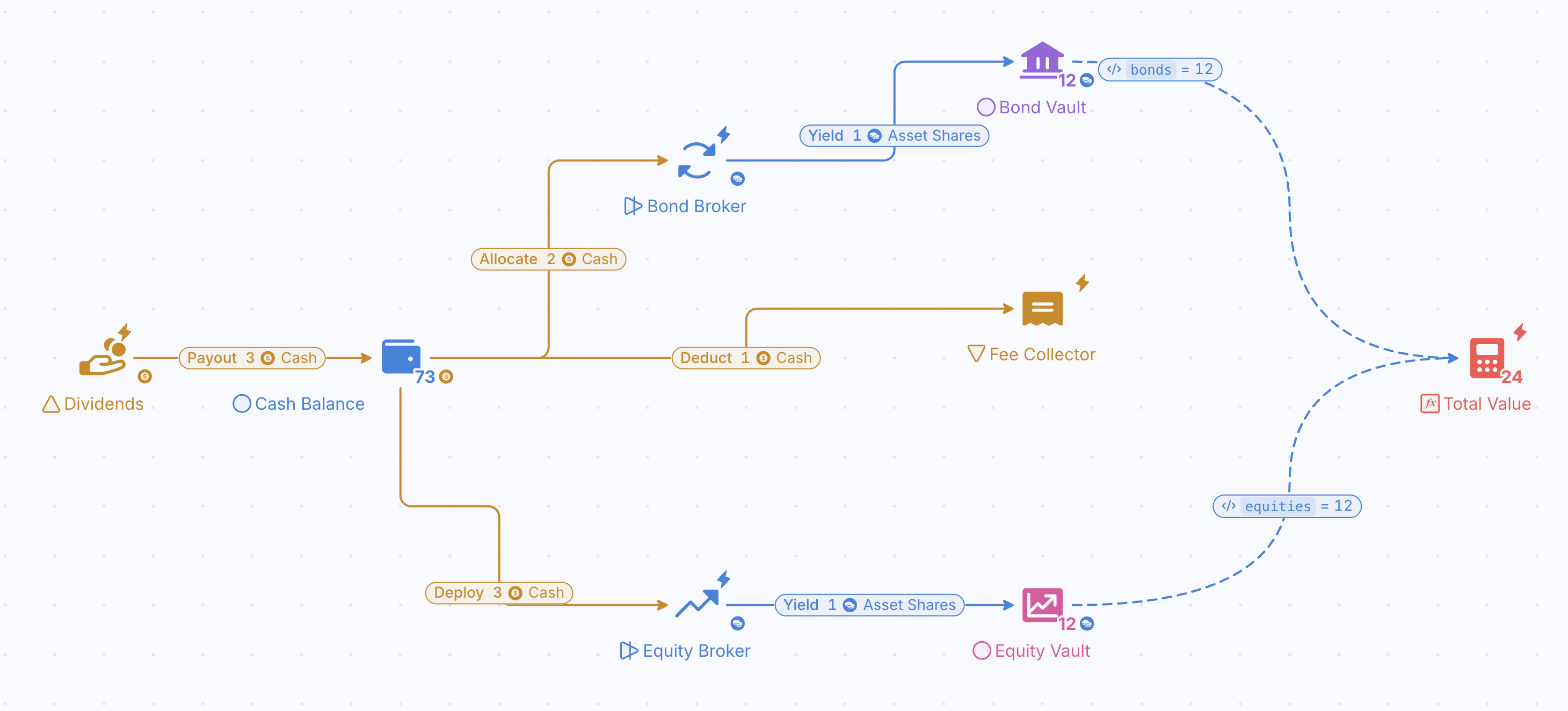
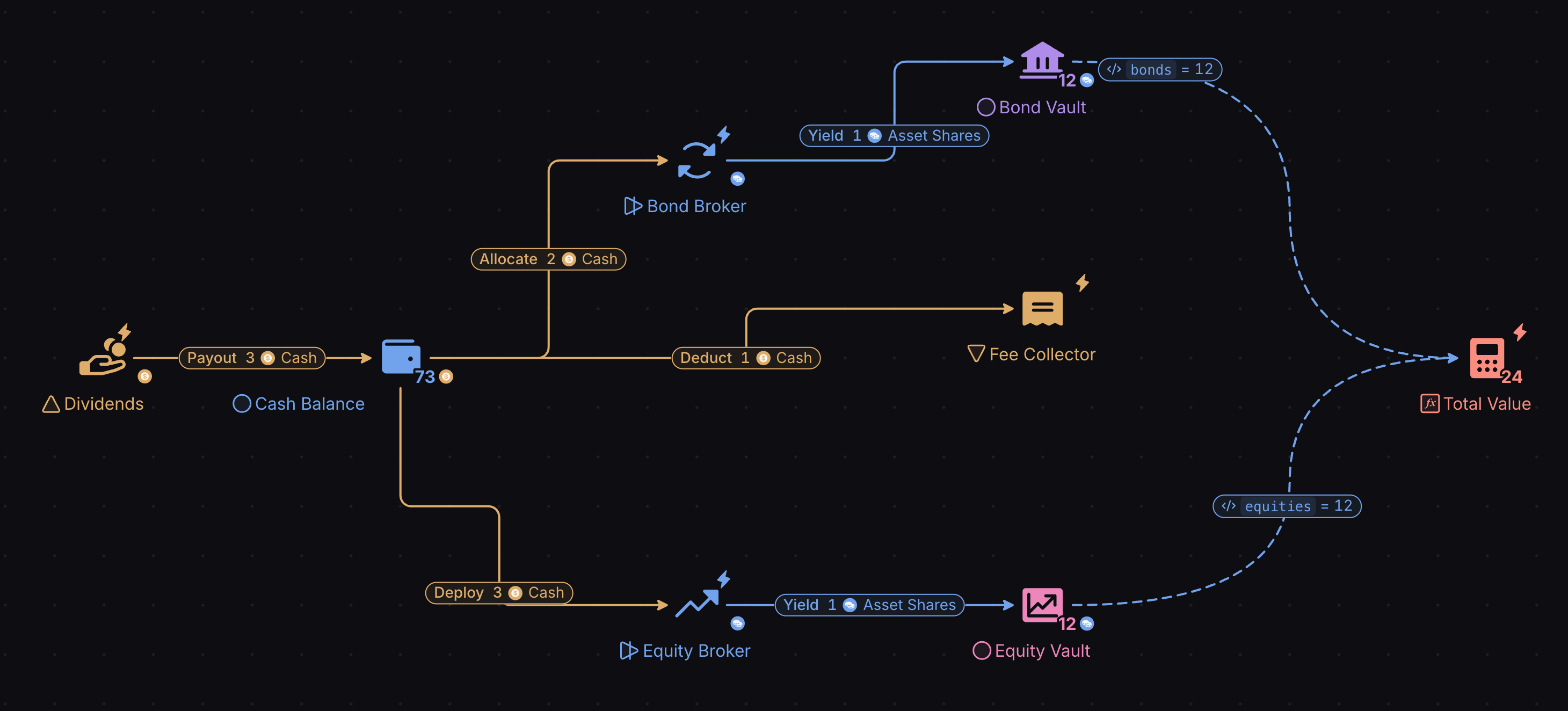
Model, simulate, and optimize your investment portfolios for superior performance and risk management.
Design
Create playable diagrams for any system, regardless of complexity. Make feedback loops and economies easier to validate, communicate and understand.
Predict
Gain data-driven insights by employing out-of-the-box Monte Carlo simulations. Test what-if scenarios and measure their impact in a safe, virtual environment, with one click of the button.
Balance
Move the Levers of a model, Forecast what each change does and compare the Outcomes of every Scenario, so a system is balanced on evidence rather than trial and error.
What you can do with it
Portfolio management
Model portfolios by asset allocation, risk tolerance and market trends.
Risk assessment
Simulate how market volatility and economic change affect the risk and performance of each asset class.
Resource allocation
Plan the distribution of financial and non-financial resources across projects or business units.
Financial planning
Simulate long-term plans from income, expenses, savings and investment growth.
Cash flow management
Forecast cash flow scenarios and plan for liquidity needs.
Asset valuation
Model how market trends and economic factors move the value of real estate, stocks, bonds and other assets.
The asset management pipeline, from procurement to depreciation
Asset management is buying, maintaining and disposing of assets within a given risk tolerance, to improve performance and profit while staying sustainable.
It covers tangible assets, such as plants, infrastructure, buildings and equipment, and intangible ones, such as intellectual property and financial assets. Engineering, business and public infrastructure all use it to coordinate cost, risk, performance and sustainability.
The lifecycle has seven stages:
- Planning and acquisition: identify needs, budget, buy.
- Registration: tag each asset with a unique identifier (barcode, RFID) and record its type, serial number, purchase date, cost, receipts, warranty and manual.
- Deployment: install the asset where it is needed, integrate it with existing systems and train users or operators.
- Maintenance and monitoring: routine service, repairs and upgrades.
- Utilization: track how assets are used, analyze the data to reduce downtime and make sure they comply with regulations and standards.
- Valuation and depreciation: assess value for financial reporting.
- Reporting, auditing and disposal: generate reports on status, maintenance and financials, audit records against policy, then sell, recycle or discard retired assets and update the inventory.
The attached diagram models these stages for the laptops of an IT department. Procurement buys laptops each month into a Stock pool, and Deployment moves them to staff as new people join. Maintenance keeps deployed laptops healthy. At the end of its lifetime a laptop is retired into storage and written off at disposal. A Book value pool rises with every purchase and falls with monthly depreciation.
Four Levers drive the plan: Laptops purchased per month, New staff per month, Laptop lifetime in months and Maintenance cycle in months. Press Play for 48 months and watch Stock, Deployed laptops, Book value and Retired laptops respond, then move a Lever to test whether you are buying too many laptops or too few.
Plan the asset life before it costs you
Model wear, maintenance and replacement as a system, then Forecast cost and availability under each policy.
- ISO 27001 certified
- SSO & SAML
- GDPR compliant
- Trustpilot verified
- Red Herring Top 100
- Dealroom Rising Star